




Petrol or Diesel Car : Know the Pros and Cons Before You Buy
Buying a new car is exciting, but one of the biggest decisions buyers face is choosing between a petrol car and a diesel car. While both options can take you from point A to point B comfortably, they differ significantly in fuel efficiency, maintenance costs, performance, ownership experience and long-term value.
Many buyers focus only on the purchase price, but the real cost of ownership depends on how much you drive, where you drive and how long you plan to keep the vehicle.
In this guide, Detailing Devils explains the advantages and disadvantages of petrol and diesel cars so you can make an informed decision before investing your money.
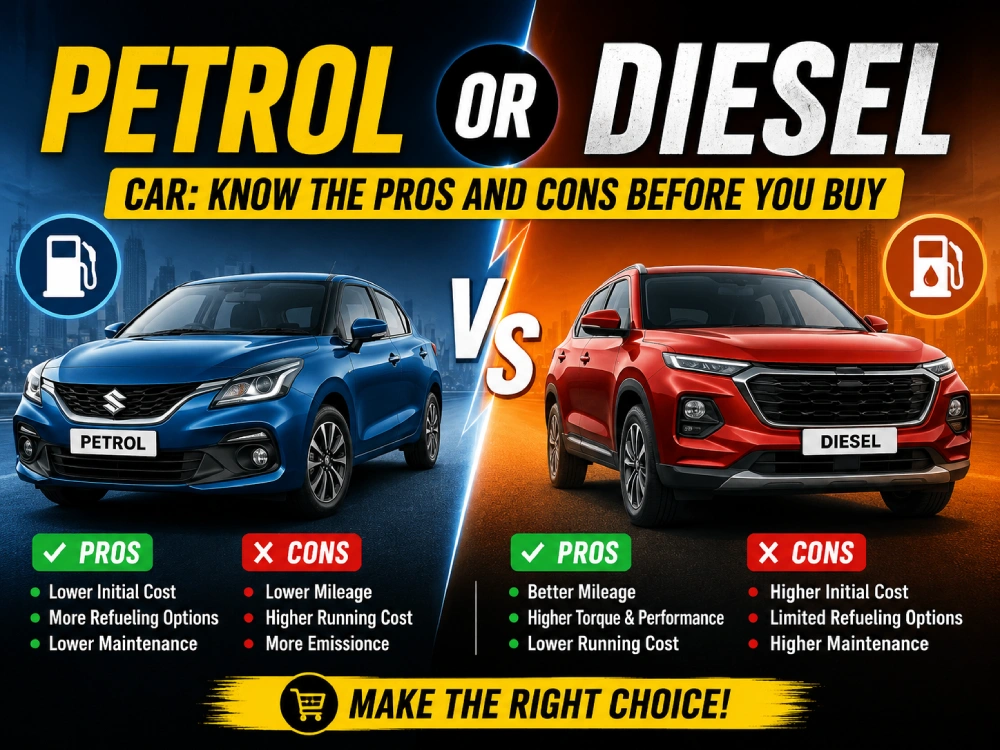
Detailing Devils Tip: The right choice depends less on the vehicle itself and more on your annual driving requirements.
What You'll Learn in This Guide
- Difference between petrol and diesel engines
- Petrol car advantages and disadvantages
- Diesel car advantages and disadvantages
- Running cost comparison
- Maintenance comparison
- Which fuel type suits your driving habits
- FAQs before buying
Understanding Petrol and Diesel Engines
Petrol and diesel engines work on similar principles but use different combustion methods.
A petrol engine uses spark plugs to ignite fuel-air mixtures, resulting in smoother and quieter operation.
A diesel engine compresses air to a much higher level, generating heat that ignites the fuel automatically. This produces higher torque and better fuel efficiency.
These differences directly affect performance, mileage, maintenance costs and ownership experience.
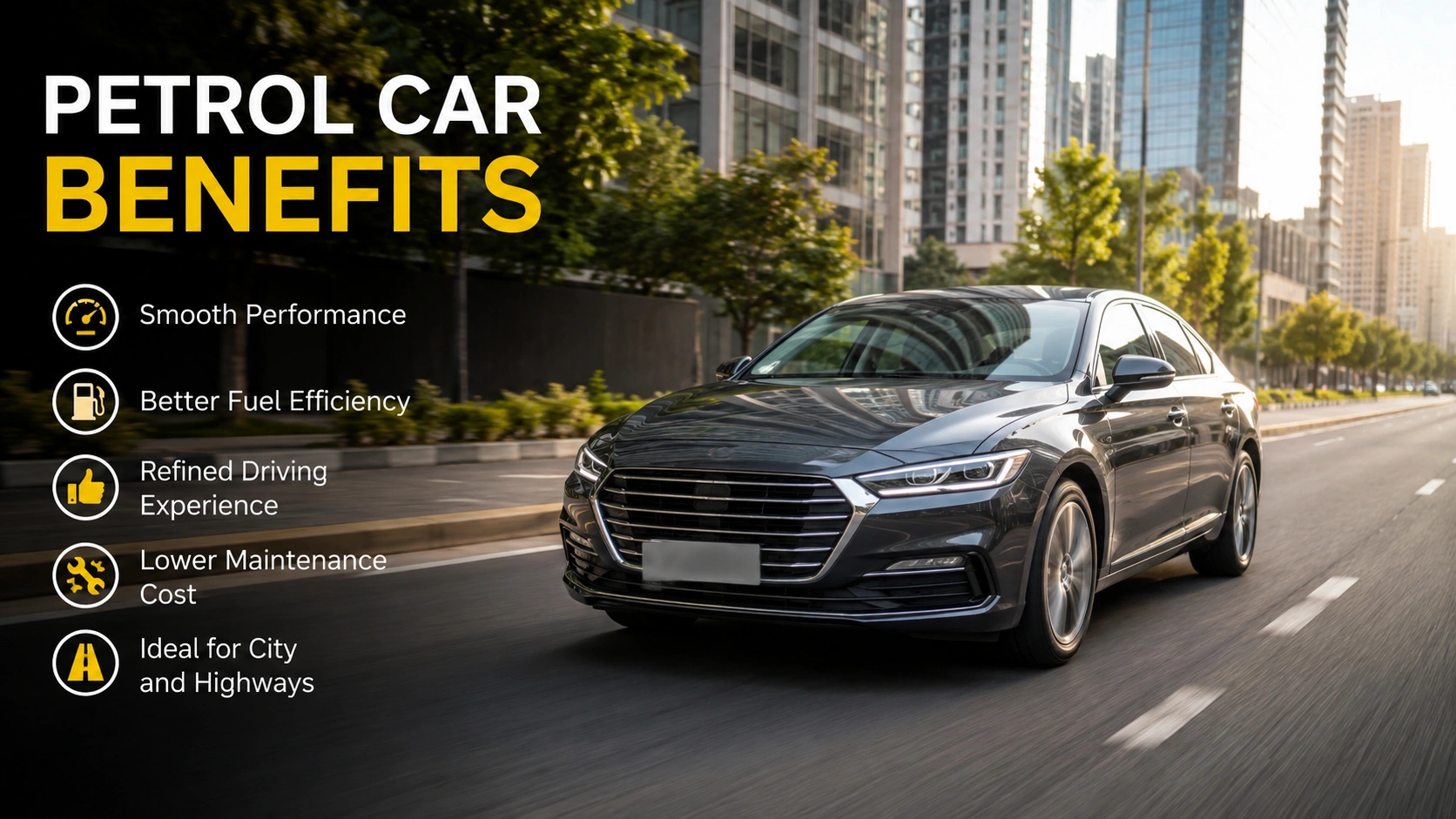
Pros of Buying a Petrol Car
1. Lower Purchase Price
Petrol vehicles generally cost less than their diesel counterparts. If you're buying on a budget, petrol variants often provide better value upfront.
2. Smooth and Quiet Driving Experience
Petrol engines are known for refined performance and lower engine noise, making city driving more comfortable.
3. Lower Maintenance Costs
Routine servicing is usually less expensive because petrol engines have fewer complex components compared to diesel engines.
4. Ideal for City Driving
Frequent stop-and-go traffic conditions suit petrol vehicles better than diesel vehicles.
5. Better for Low Annual Usage
If your annual driving is below 10,000—12,000 km, a petrol vehicle often makes more financial sense.
Cons of Buying a Petrol Car
Higher Fuel Consumption
Petrol cars generally offer lower mileage than diesel cars.
Higher Running Costs
Frequent drivers may spend significantly more on fuel over time.
Lower Torque
Petrol engines usually produce less low-end torque, making them less suitable for heavy loads or frequent highway hauling.
Pros of Buying a Diesel Car
1. Excellent Fuel Efficiency
Diesel engines typically deliver better mileage, reducing fuel expenses over long distances.
2. Higher Torque Output
Diesel vehicles provide strong pulling power, making them ideal for highways, hills and loaded driving conditions.
3. Lower Cost Per Kilometer
Frequent travelers and commercial users often benefit from reduced running costs.
4. Better for Highway Driving
Long-distance drivers can recover the higher purchase cost through fuel savings.
5. Strong Performance Under Load
SUVs, commercial vehicles and larger family vehicles often benefit from diesel power.
Cons of Buying a Diesel Car
Higher Purchase Cost
Diesel variants are generally more expensive.
Costlier Maintenance
Modern diesel engines include components such as turbochargers and emission-control systems that can increase maintenance expenses.
Noise and Vibration
Although modern diesel vehicles are significantly improved, they are still generally noisier than petrol vehicles.
Not Ideal for Short Trips
Frequent short-distance city driving may not allow diesel systems to operate optimally.
Petrol vs Diesel: Quick Comparison
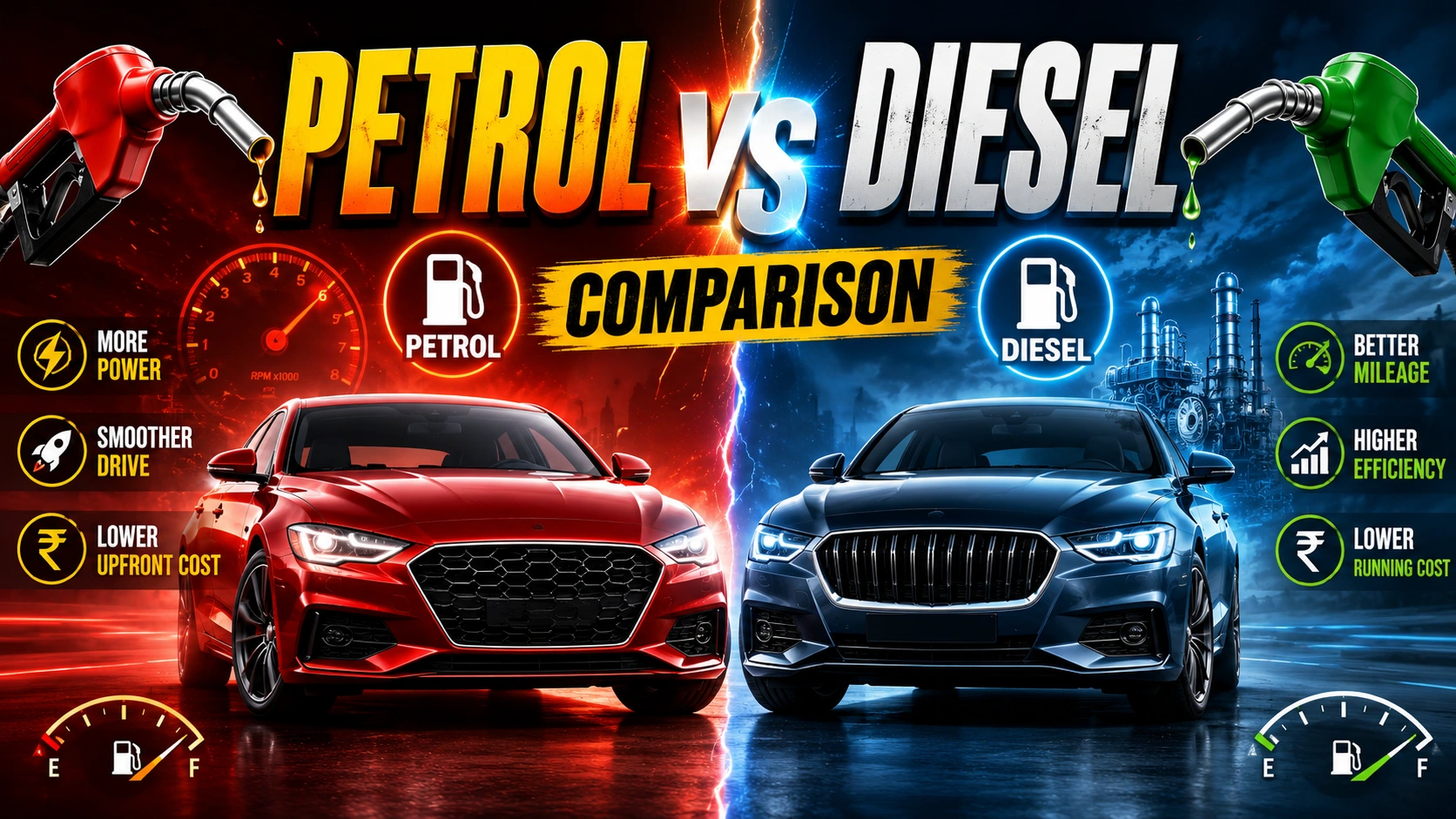
| Factor | Petrol Car | Diesel Car |
|---|---|---|
| Purchase Price | Lower | Higher |
| Mileage | Moderate | Higher |
| Fuel Cost | Higher Running Cost | Lower Running Cost |
| Maintenance | Lower | Higher |
| Refinement | Excellent | Good |
| Torque | Moderate | High |
| City Driving | Excellent | Good |
| Highway Driving | Good | Excellent |
| Annual Usage | Below 12,000 km | Above 15,000 km |
| Resale Value | Good | Good |
Which Car Should You Buy?
Choose a Petrol Car If:
- You mainly drive in the city.
- Annual driving is below 12,000 km.
- You want lower maintenance costs.
- You prefer smoother and quieter driving.
Choose a Diesel Car If:
- You frequently travel on highways.
- Annual driving exceeds 15,000 km.
- Fuel efficiency is a top priority.
- You need strong pulling power and torque.
Final Verdict
There is no universally better option between petrol and diesel cars. The right choice depends entirely on your driving habits, annual mileage and ownership goals.
For urban commuters and occasional drivers, a petrol vehicle usually provides better value and convenience. For long-distance travelers and high-mileage users, a diesel vehicle can offer significant savings over time.
Whichever vehicle you choose, maintaining its appearance and condition is equally important. Professional detailing, ceramic coating and paint protection help preserve your investment and keep your car looking new for years.
Want to protect your new car from scratches, UV damage and everyday wear? Visit Detailing Devils and explore Professional Detailing, Ceramic Coating and PPF solutions for long-lasting protection.
FAQ
It depends on your usage. Petrol cars are better for city driving and lower annual mileage, while diesel cars are better for frequent long-distance driving.
Petrol cars generally have lower maintenance costs.
Yes, diesel engines typically offer higher fuel efficiency than petrol engines.
Resale value varies by market and vehicle model, but both can perform well when properly maintained.
Yes, for drivers covering high annual mileage and regular highway travel, diesel vehicles can still be a practical choice.
Related Blogs:
- Best Car Cleaning Service in Noida - Find the best car cleaning services in Noida and keep your car looking new.
- Car Detailing Products - Discover the best products for car detailing and how to use them to achieve a professional shine.
- Detailing Services for Different Cars - Learn about the different types of detailing services available for different types of cars and which one is best for you.
- Car Detailing for Different Seasons - Find out how to prepare your car for different seasons with the right detailing methods and products.
- How to clean your car's interior - Learn the 8 best techniques and products for cleaning the interior of your car, including the seats, dashboard, and carpets.

