




Rising Petrol Prices? Check Out These 5 High-Mileage Cars in India | E20 Fuel Explained
Over the past few years, rising petrol prices have become a growing concern for millions of Indian motorists. Whether it's daily office commutes, weekend road trips, or routine errands, the increasing cost of fuel has significantly impacted household budgets. As a result, buyers are becoming more conscious about fuel efficiency, making high-mileage cars one of the most important factors when purchasing a new vehicle. A car that delivers better mileage not only helps reduce monthly fuel expenses but also offers greater long-term savings.
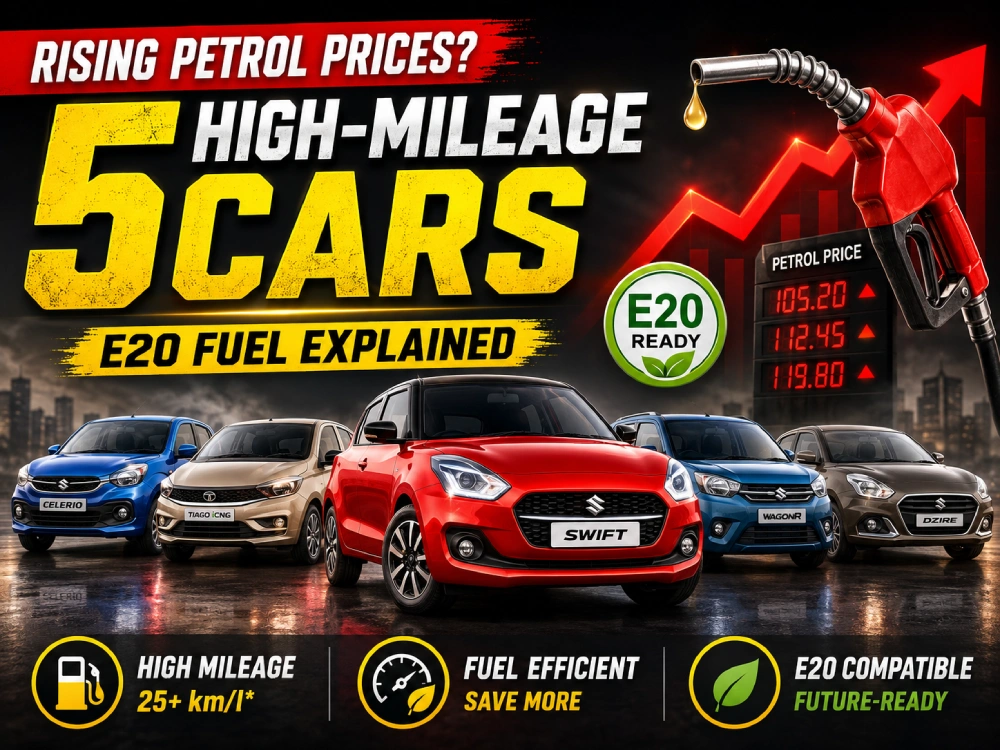
Adding to the conversation is the nationwide rollout of E20 petrol, a fuel blend containing 20% ethanol and 80% petrol. Introduced as part of the Government of India's ethanol blending programme, E20 aims to reduce crude oil imports, lower vehicle emissions, and promote cleaner mobility. However, as E20 fuel became more widely available, discussions quickly spread across social media platforms, with many users sharing their experiences and concerns.
Some drivers have claimed they noticed a slight drop in mileage after switching to E20 petrol, while others reported no significant difference in their vehicle's performance. Questions have also surfaced about engine compatibility, especially for older vehicles, along with viral claims suggesting that using E20 fuel could affect vehicle warranties or even invalidate insurance coverage. These discussions have understandably left many car owners wondering what to believe.
So, are these concerns backed by facts, or are they simply myths amplified by social media? In this article, we'll break down the facts behind E20 petrol, explain the government's clarification on the most common claims, explore what people are saying online, and highlight five of the best high-mileage cars in India that can help you save money as fuel prices continue to rise.
Why Is Everyone Talking About E20 Petrol?
As petrol prices continue to rise across India, another topic has been dominating conversations among car owners—E20 petrol. From news reports and automobile forums to social media discussions, many motorists are asking the same questions: Will E20 affect my car's mileage? Is it safe for my engine? Will it impact my vehicle's warranty or insurance? These concerns have sparked widespread debate, making E20 one of the most talked-about fuel initiatives in recent years.
Before jumping to conclusions, it's important to understand what E20 petrol is, why the Government of India introduced it, and what benefits it aims to deliver.
What Is E20 Petrol?
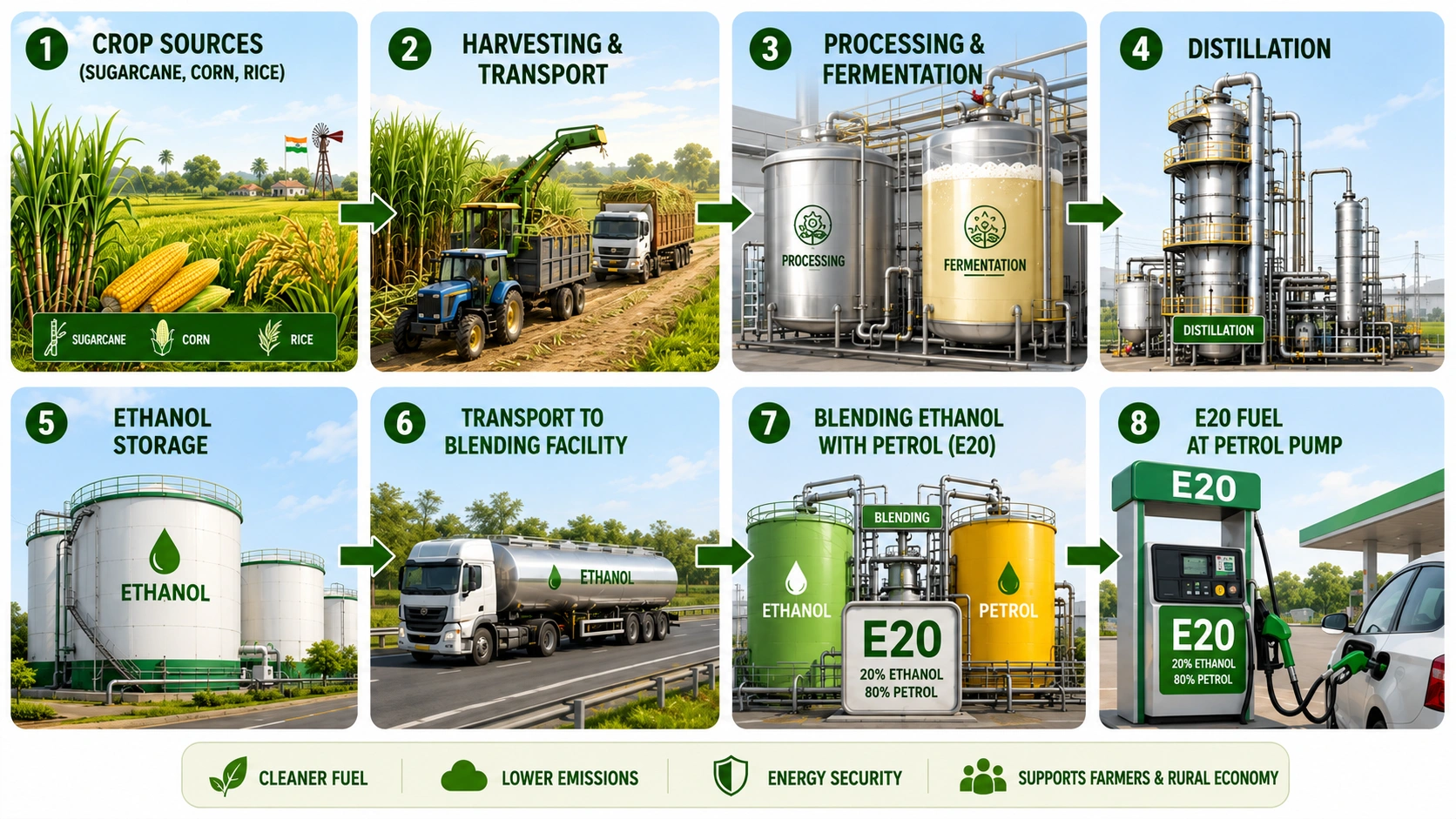
E20 petrol is a fuel blend consisting of 20% ethanol and 80% petrol. Ethanol is a renewable biofuel produced from agricultural feedstocks such as sugarcane, maize, damaged food grains, rice, and other biomass. Since ethanol is derived from renewable resources rather than fossil fuels, it is considered a cleaner alternative that helps reduce the environmental impact of transportation.
The introduction of E20 is part of India's broader effort to make the country's transport sector more sustainable while reducing dependence on imported crude oil.
Why Did India Introduce E20 Fuel?
India imports a significant portion of the crude oil required to meet its growing fuel demand. As international crude oil prices fluctuate, they directly influence domestic petrol prices, increasing the financial burden on consumers and the economy.
To address this challenge, the Government of India expanded its Ethanol Blended Petrol (EBP) Programme, encouraging the use of domestically produced ethanol as a partial substitute for petrol. The initiative is designed not only to reduce fuel import bills but also to promote cleaner energy, strengthen rural economies, and support India's long-term environmental commitments.
The transition to E20 petrol represents an important step toward creating a more self-reliant and sustainable fuel ecosystem.
India's Ethanol Blending Mission
India has significantly accelerated its ethanol blending programme over the past few years. The government's objective is to increase the proportion of ethanol blended with petrol and make E20 fuel widely available across the country. Oil marketing companies have been expanding E20 fuel distribution, while automobile manufacturers have started producing vehicles specifically designed to run efficiently on E20 petrol.
This coordinated effort reflects India's commitment to cleaner mobility and reduced dependence on conventional fossil fuels.
Key Benefits of Ethanol Blending
Reduced Dependence on Crude Oil Imports
India spends billions of dollars every year importing crude oil. By replacing a portion of petrol with domestically produced ethanol, the country can lower its import dependence, reduce foreign exchange expenditure, and improve economic resilience against global oil price volatility.
Lower Vehicle Emissions
Ethanol is an oxygen-rich fuel that burns more efficiently than conventional petrol. Blending ethanol with petrol helps reduce emissions of harmful pollutants such as carbon monoxide and certain hydrocarbons, contributing to cleaner air and supporting India's efforts to reduce its carbon footprint.
Improved Energy Security
Diversifying fuel sources is essential for long-term energy stability. Producing ethanol within India from renewable agricultural resources decreases reliance on imported fossil fuels and strengthens the nation's energy security. A robust domestic biofuel industry also helps ensure a more stable fuel supply during global market disruptions.
Better Income Opportunities for Farmers
One of the most significant advantages of ethanol blending is its positive impact on the agricultural sector. Ethanol production creates additional demand for crops such as sugarcane and maize, as well as surplus and damaged food grains that might otherwise go unused. This provides farmers with an additional source of income, promotes better utilization of agricultural produce, and supports rural economic growth.
Why Are People Still Concerned?
Despite these benefits, E20 petrol has generated mixed reactions among vehicle owners. Some drivers report no noticeable difference in their vehicles after switching to E20, while others have questioned its impact on fuel efficiency, engine compatibility, and maintenance costs—particularly for older vehicles. Viral social media posts have also fueled discussions about insurance coverage and long-term reliability, leaving many consumers uncertain about what is fact and what is misinformation.
How Is Ethanol Made?
E20 petrol contains 20% ethanol and 80% petrol. Ethanol is a renewable biofuel produced from agricultural crops such as sugarcane, maize, rice, and damaged food grains. These crops are processed through fermentation, where natural sugars are converted into alcohol, followed by distillation to purify the ethanol. The final product is then blended with petrol at oil depots before being supplied to fuel stations across India.
The Government of India promotes ethanol blending to reduce dependence on imported crude oil, lower carbon emissions, and create additional income opportunities for farmers by utilizing agricultural produce more effectively.
Why Are People Concerned About E20 Petrol?
As E20 petrol became available at more fuel stations, discussions quickly spread across social media. Many vehicle owners began sharing their experiences and asking questions about its impact on their cars.
The most common concerns include:
- Mileage: Some drivers believe E20 may slightly reduce fuel efficiency.
- Older Vehicles: Owners of older cars are unsure whether their engines are compatible with E20 fuel.
- Engine Compatibility: Questions have been raised about long-term engine performance and reliability.
- Insurance Rumours: Viral posts claimed that using E20 petrol could void vehicle insurance.
- Maintenance: Some motorists worry about possible long-term maintenance costs.
While these concerns have gained attention online, many of them are based on speculation rather than official guidance.
Government Clarification on E20 Fuel
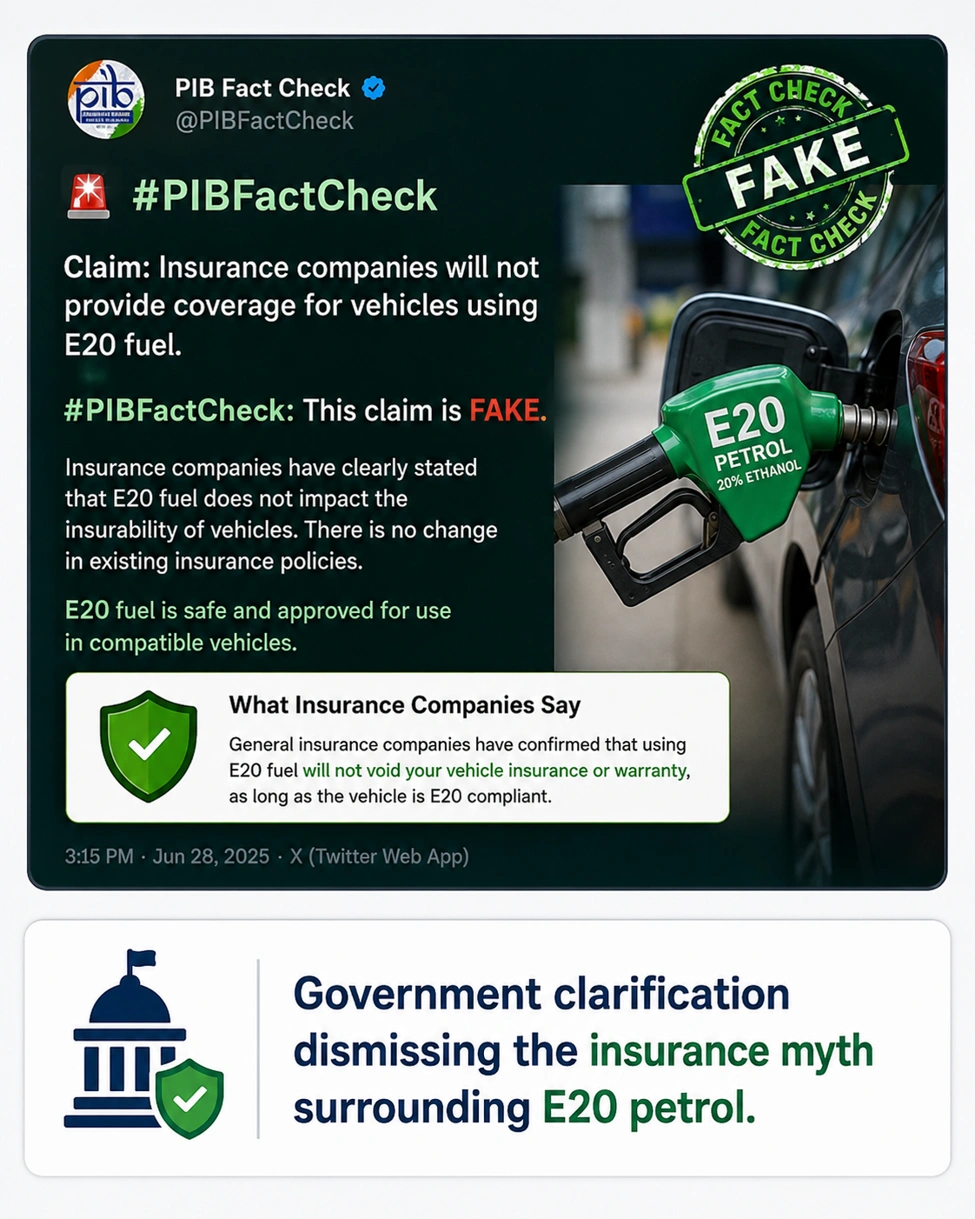
Following viral claims on social media, the Government of India clarified that using E20 petrol does not automatically void a vehicle's insurance. Insurance claims are determined by the policy's terms and the manufacturer's recommendations—not simply by the type of fuel used.
The government also stated that E20-compatible vehicles are specifically designed and tested to operate safely with the fuel blend. The Ethanol Blended Petrol (EBP) Programme is supported by scientific research, industry testing, and regulatory standards before nationwide implementation.
For owners of older vehicles, the government advises checking the vehicle's owner's manual or consulting an authorised service centre to confirm E20 compatibility.
What Are People Saying Online?
As E20 petrol becomes more widely available, discussions about it have grown across social media, automobile forums, and online communities. While opinions vary, most conversations revolve around personal experiences rather than verified facts.
Positive Reactions
Many users have shared encouraging feedback after switching to E20 petrol. Some drivers say they haven't noticed any significant difference in their vehicle's performance or fuel efficiency. Others support the government's ethanol blending initiative, believing it can help reduce India's dependence on imported crude oil while contributing to a cleaner environment.
Mixed Reactions
At the same time, some vehicle owners feel they have experienced a slight drop in mileage after using E20 petrol. Others believe there should be greater public awareness about vehicle compatibility before E20 is adopted nationwide. Owners of older vehicles, in particular, continue to seek clearer guidance from manufacturers regarding fuel compatibility and long-term usage.
While these discussions reflect genuine consumer experiences, it's important to rely on official guidance and manufacturer recommendations rather than social media posts alone.

Does E20 Really Reduce Mileage?
One of the biggest concerns surrounding E20 petrol is whether it affects a car's fuel efficiency. The answer isn't a simple yes or no.
Ethanol contains slightly less energy than conventional petrol, which means a small difference in mileage is possible under certain driving conditions. However, the actual impact depends on several other factors.
Fuel efficiency is influenced by:
- Driving style
- Tyre pressure
- Regular vehicle servicing
- Traffic conditions
- Vehicle load
For E20-compatible vehicles, manufacturers design engines to operate efficiently with the fuel blend. In many cases, these everyday factors have a greater impact on mileage than the fuel itself.
Rising Petrol Prices? Here Are 5 High-Mileage Cars
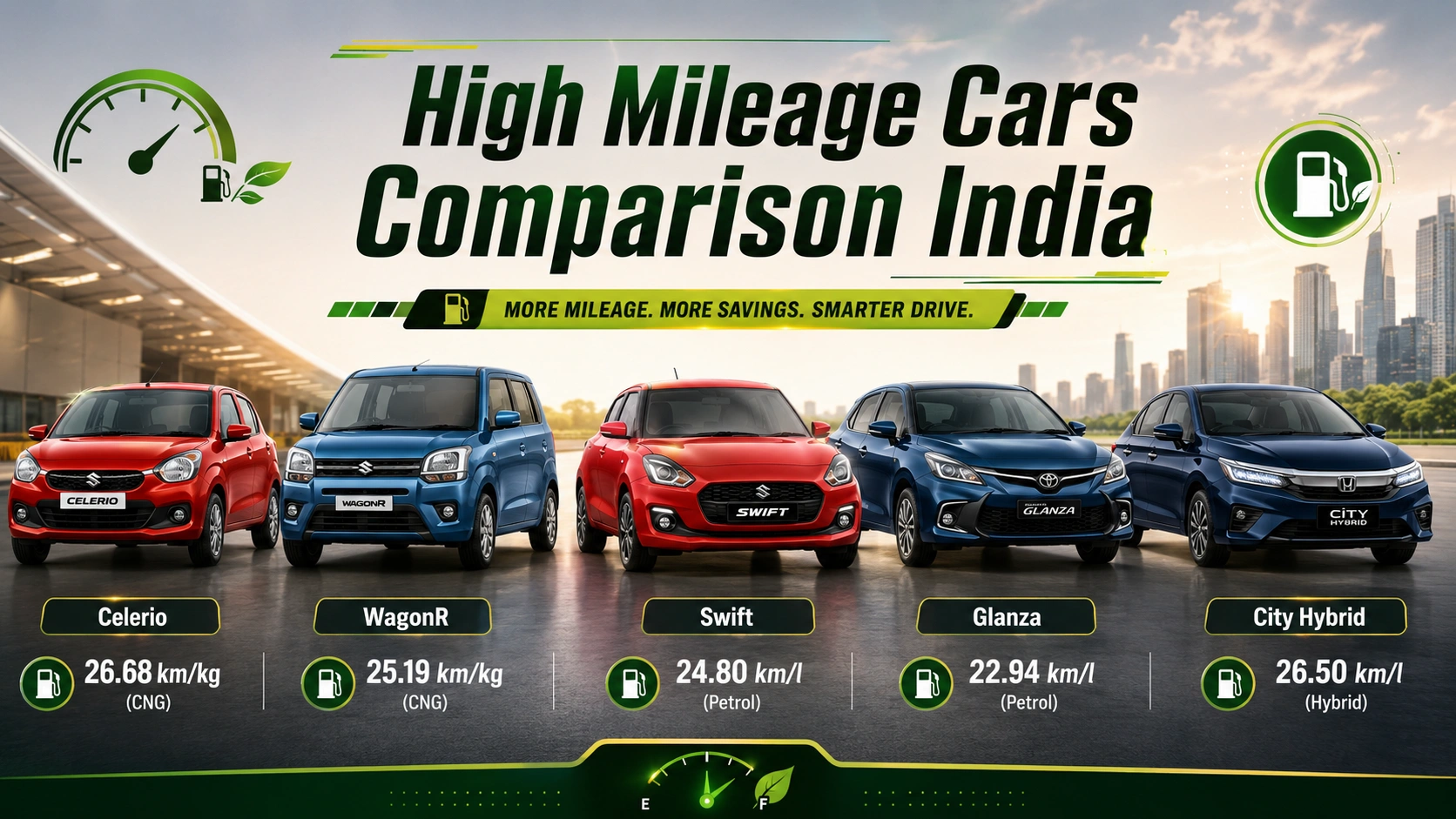
If you're looking to reduce fuel expenses, choosing a fuel-efficient car can make a noticeable difference. Here are five popular options available in India.
| Car | Engine | Claimed Mileage* | Fuel Type | Starting Price (Approx.) | Why It's a Good Choice |
|---|---|---|---|---|---|
| Maruti Suzuki Celerio | 1.0L Petrol | Up to 26.68 km/l | Petrol/CNG | ₹5.6 lakh | One of India's most fuel-efficient hatchbacks. |
| Maruti Suzuki WagonR | 1.0L & 1.2L Petrol | Up to 25.19 km/l | Petrol/CNG | ₹5.8 lakh | Spacious, reliable, and economical for city driving. |
| Maruti Suzuki Swift | 1.2L Z-Series Petrol | Up to 25.75 km/l | Petrol/CNG | ₹6.5 lakh | Stylish hatchback with excellent mileage and performance. |
| Toyota Glanza | 1.2L Petrol | Up to 22.94 km/l | Petrol/CNG | ₹6.9 lakh | Premium hatchback with refined engine and comfort. |
| Honda City Hybrid | 1.5L Hybrid | Up to 27.13 km/l | Strong Hybrid | ₹20 lakh | Outstanding fuel economy with advanced hybrid technology. |
*Claimed mileage figures may vary depending on the variant and driving conditions.
Tips to Get Better Mileage
No matter which car you drive, following a few simple habits can help improve fuel efficiency and lower your running costs.
- Maintain the recommended tyre pressure.
- Avoid sudden acceleration and harsh braking.
- Service your vehicle regularly.
- Remove unnecessary weight from the vehicle.
- Drive at a steady speed whenever possible.
- Always use the fuel recommended by your vehicle manufacturer.
By combining smart driving habits with a fuel-efficient car, you can maximize every litre of fuel and reduce the impact of rising petrol prices.
Should You Be Worried About E20 Petrol?
The growing discussion around E20 petrol has left many vehicle owners wondering whether they should be concerned. The answer largely depends on your vehicle's compatibility.
If your car is E20-compatible, you can use E20 petrol by following the manufacturer's recommendations. Newer vehicles have been designed and tested to operate efficiently with higher ethanol blends.
If you own an older vehicle, it's best to check your owner's manual or consult an authorised service centre before switching to E20 fuel. Compatibility can vary depending on the model and year of manufacture.
It's also important to avoid making decisions based solely on viral social media posts. While online discussions can be helpful for understanding user experiences, official guidance from your vehicle manufacturer and government authorities remains the most reliable source of information.
Final Verdict
With petrol prices continuing to rise, choosing a fuel-efficient car has become more important than ever. At the same time, E20 petrol represents an important step in India's long-term strategy to reduce crude oil imports, lower emissions, and promote cleaner, more sustainable transportation.
While concerns about mileage, engine compatibility, and insurance are understandable, official clarifications indicate that E20-compatible vehicles are designed to safely use this fuel. For older vehicles, checking the manufacturer's recommendations before switching remains the safest approach.
Whether you're planning to buy a new car or simply looking to reduce your fuel expenses, selecting a high-mileage vehicle, maintaining it regularly, and following smart driving practices can make a significant difference. Most importantly, stay informed through reliable sources instead of relying on unverified social media claims. Making informed decisions today can help you save money at the fuel pump while supporting India's transition toward cleaner mobility.
📞 Book Premium Car Detailing Services Near You |
Locate Your Nearest Detailing Devils Studio
(Want to turn your passion for cars into a highly profitable business? Explore our Car Detailing Franchise Opportunities today!)
FAQ
Ethanol contains slightly less energy than petrol, so a small reduction in mileage may be possible. However, driving style, vehicle condition, and traffic often have a greater impact on fuel efficiency.
Yes, if your vehicle is E20-compatible and the manufacturer recommends its use. Owners of older vehicles should check their owner's manual or consult an authorised service centre.
No. The Government of India has clarified that using E20 petrol does not automatically void vehicle insurance. Insurance claims depend on the policy terms and the circumstances of the claim.
Many recently launched vehicles from manufacturers such as Maruti Suzuki, Hyundai, Tata Motors, Mahindra, Honda, and Toyota are designed or certified for E20 compatibility. Always verify with the manufacturer for your specific model.
Some of the most fuel-efficient cars currently available include the Maruti Suzuki Celerio, Maruti Suzuki Swift, Maruti Suzuki WagonR, Toyota Glanza, and Honda City Hybrid.
Related Blogs:
- Best Car Cleaning Service in Noida - Find the best car cleaning services in Noida and keep your car looking new.
- Car Detailing Products - Discover the best products for car detailing and how to use them to achieve a professional shine.
- Detailing Services for Different Cars - Learn about the different types of detailing services available for different types of cars and which one is best for you.
- Car Detailing for Different Seasons - Find out how to prepare your car for different seasons with the right detailing methods and products.
- How to clean your car's interior - Learn the 8 best techniques and products for cleaning the interior of your car, including the seats, dashboard, and carpets.

