




What Causes Car Oil Leaks and How to Fix Them : The Complete Guide Every Car Owner Should Read
You park your car overnight, and the next morning you notice a few dark stains on the ground beneath the engine. At first, it may seem like a minor issue, but those small oil spots could be the first warning sign of an engine oil leak.
Engine oil is the lifeblood of your vehicle. It lubricates moving components, reduces friction, controls engine temperature, minimizes wear, and protects internal parts from corrosion. Even a small leak can gradually reduce oil levels, causing increased engine wear and potentially leading to expensive repairs if ignored.
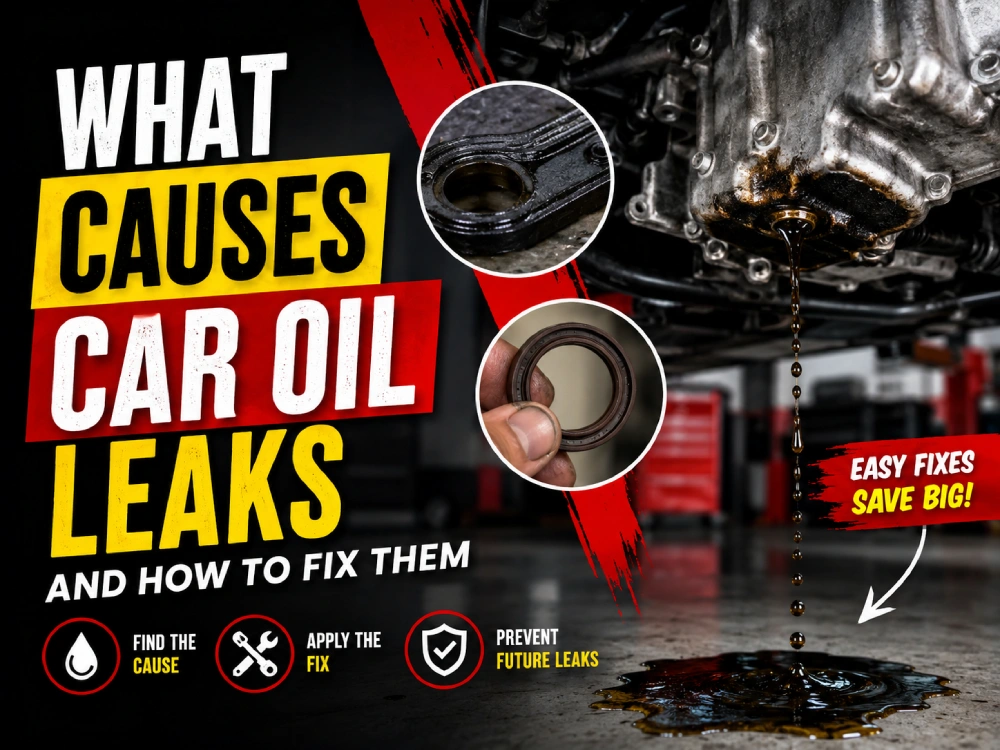
Many car owners continue driving without realizing that low engine oil can result in overheating, poor engine performance, increased fuel consumption, and, in severe cases, complete engine failure.
The good news is that most oil leaks start small and can be repaired before they become major problems. Identifying the source early not only protects your engine but also saves you from costly repairs in the future.
In this comprehensive Detailing Devils guide, you'll learn the most common causes of engine oil leaks, warning signs to watch for, repair options, preventive maintenance tips, estimated repair costs, and expert advice to keep your vehicle running smoothly.
Reality Check: Even a small engine oil leak can become a major repair if ignored for several weeks or months. Early diagnosis almost always costs less than replacing damaged engine components.
What You'll Learn in This Guide
- What engine oil does
- What causes engine oil leaks
- Common warning signs
- Most common leak locations
- How to identify an oil leak
- Estimated repair costs
- DIY inspection checklist
- Prevention tips
- Common myths about oil leaks
- Frequently Asked Questions
Why Is Engine Oil So Important?
Engine oil performs several critical functions that keep your vehicle operating efficiently.
Without proper lubrication, metal engine components create excessive friction, generating heat and causing premature wear.
Engine oil helps:
- Lubricate moving engine parts
- Reduce friction
- Prevent overheating
- Remove dirt and sludge
- Protect against corrosion
- Improve fuel efficiency
- Extend engine life
- Support smooth engine performance
That's why maintaining the correct oil level is one of the most important aspects of vehicle maintenance.
What Is an Engine Oil Leak?
An engine oil leak occurs when lubricating oil escapes from the engine instead of remaining sealed inside the lubrication system.
Oil can leak from:
- Engine gaskets
- Oil seals
- Oil pan
- Drain plug
- Oil filter
- Valve cover
- Timing cover
- Oil cooler
- Turbocharger oil lines (where applicable)
Leaks may develop slowly over time or occur suddenly due to damaged components or improper servicing.
Why Oil Leaks Should Never Be Ignored
Some drivers assume that adding more oil is enough to solve the problem.
Unfortunately, that's only a temporary solution.
Ignoring an oil leak can lead to:
- Low engine oil levels
- Increased engine wear
- Poor lubrication
- Engine overheating
- Reduced fuel efficiency
- Smoke from the engine bay
- Damage to rubber components
- Expensive engine repairs
Repairing a small gasket today is far more affordable than rebuilding an engine later.
Common Signs Your Car Has an Oil Leak
Recognizing the warning signs early can prevent serious mechanical damage.
Oil Spots Under the Car
Dark brown or black stains beneath the engine are one of the most obvious indicators of an oil leak.
Burning Oil Smell
If leaking oil drips onto hot engine components or the exhaust manifold, it may produce a noticeable burning smell.
Blue or Grey Exhaust Smoke
Oil entering the combustion chamber may create blue-grey smoke from the exhaust.
Dashboard Oil Warning Light
If the oil level becomes critically low, the oil pressure warning light may illuminate. Never ignore this warning.
Low Engine Oil Level
Frequently topping up engine oil is often a sign that oil is leaking somewhere.
Dirty Engine Bay
Oil leaks attract dust and dirt, leaving greasy deposits around the engine.
Reality Check: Oil Doesn't Just Disappear
Many people believe their engine is "consuming" oil when the oil level drops. While some engines naturally consume a small amount of oil, a sudden or significant drop often indicates external leakage, worn seals, damaged gaskets, or internal engine wear. A professional inspection can quickly determine the actual cause.
10 Common Causes of Car Oil Leaks
1. Worn Valve Cover Gasket
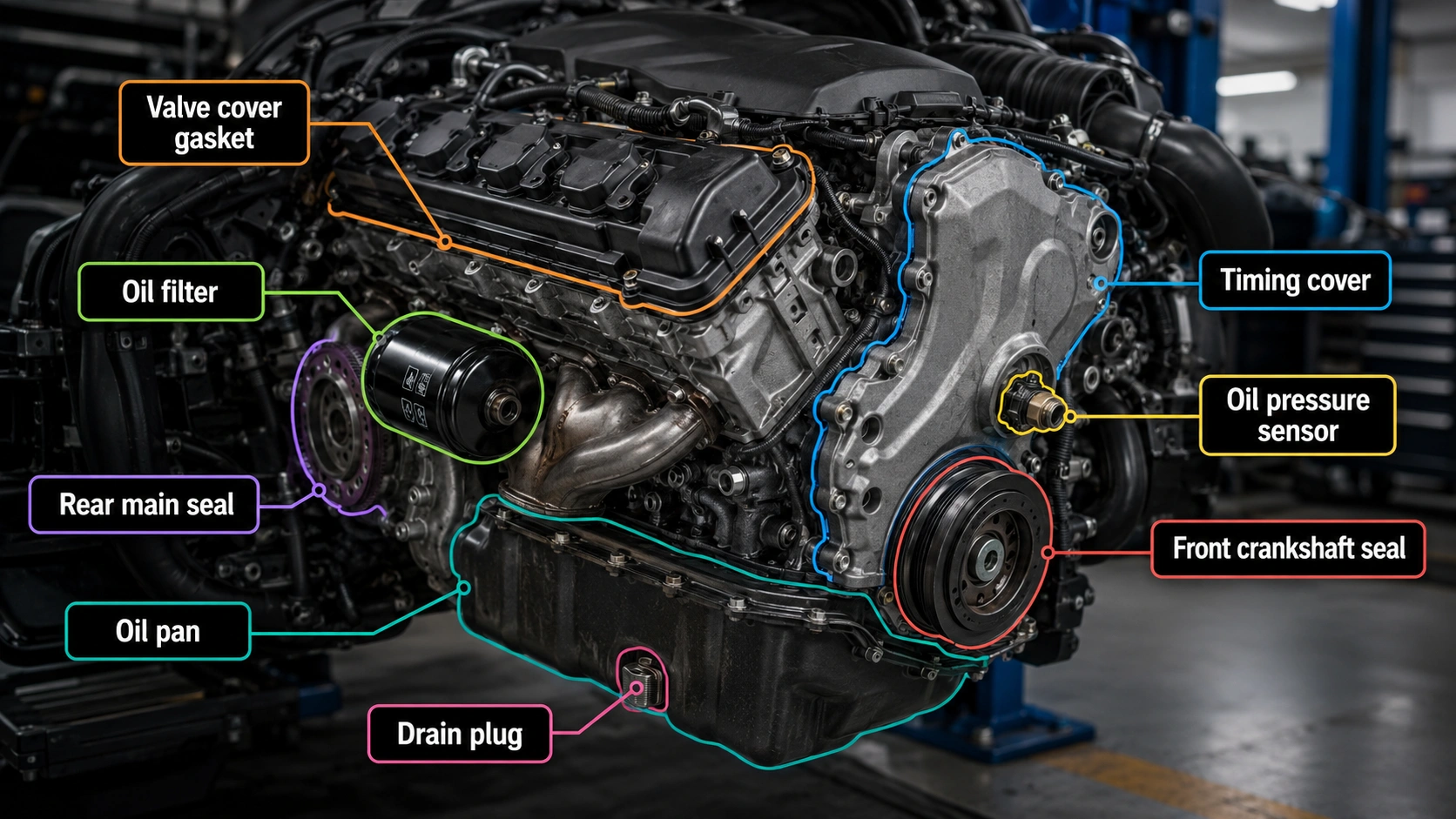
One of the most common causes of engine oil leaks is a worn or damaged valve cover gasket. Over time, constant exposure to engine heat causes the rubber gasket to harden, crack, or shrink. Once the seal weakens, oil begins leaking around the top of the engine.
Common Symptoms
- Burning oil smell
- Oil around the valve cover
- Dirty engine bay
- Oil dripping onto exhaust components
2. Damaged Oil Pan Gasket
The oil pan sits underneath the engine and stores the engine oil. Its gasket seals the connection between the oil pan and engine block. Road debris, age, improper installation, or normal wear can eventually cause this gasket to leak.
Common Symptoms
- Oil dripping underneath the engine
- Oil stains after parking
- Low oil level
- Wet oil pan surface
3. Loose or Damaged Oil Drain Plug
Every engine oil change involves removing and reinstalling the drain plug. If the drain plug isn't tightened correctly or its sealing washer becomes worn, oil may slowly leak from the bottom of the oil pan.
Common Symptoms
- Oil leak immediately after servicing
- Oil around the drain plug
- Fresh oil stains on the garage floor
4. Faulty Oil Filter
A damaged, loose, or incorrectly installed oil filter is another common source of leaks. This problem often appears shortly after an engine oil change if the filter wasn't installed properly or the rubber gasket wasn't seated correctly.
Common Symptoms
- Oil around the oil filter
- Rapid oil loss
- Oil dripping after engine start
5. Worn Front Crankshaft Seal
The front crankshaft seal is located near the crankshaft pulley and prevents engine oil from leaking out while the crankshaft rotates. Over time, continuous heat, friction, and engine vibration can cause the seal to become brittle or worn.
Common Symptoms
- Oil leaking from the front of the engine
- Oil splashes around the crankshaft pulley
- Squealing serpentine belt (if contaminated with oil)
- Oil spots beneath the front bumper area
If ignored, the leaking oil can damage belts and other engine components.
6. Rear Main Seal Failure
The rear main seal sits between the engine and transmission. It is one of the most difficult and expensive oil leaks to repair because accessing it often requires removing the transmission. Although rear main seal leaks usually begin slowly, they can worsen over time.
Common Symptoms
- Oil dripping between the engine and gearbox
- Frequent oil top-ups
- Burning oil smell
- Large oil stains after parking
7. Cracked or Damaged Oil Pan
The oil pan is positioned underneath the engine, making it vulnerable to impacts from speed breakers, potholes, rocks, or road debris. A cracked oil pan can result in a significant oil leak within minutes.
Common Symptoms
- Fresh oil pooling under the vehicle
- Rapid drop in engine oil level
- Visible crack or dent on the oil pan
- Oil pressure warning light
This type of damage should be repaired immediately to avoid severe engine damage.
8. Faulty Oil Pressure Sensor
Some vehicles develop oil leaks around the oil pressure sensor. Although the leak may appear minor initially, it can worsen over time if the sensor or its seal becomes damaged.
Common Symptoms
- Oil around the sensor area
- Oil warning light
- Small oil stains beneath the engine
Replacing the sensor is usually a straightforward repair when diagnosed early.
9. Timing Cover Gasket Leak
The timing cover protects the timing chain or timing belt and relies on a gasket to keep engine oil contained. As the gasket ages, it may crack or lose flexibility, allowing oil to seep out.
Common Symptoms
- Oil leaking from the front of the engine
- Dirty timing cover
- Oil residue around engine pulleys
10. Excessive Engine Wear
In older or high-mileage vehicles, internal engine wear may increase oil consumption or cause leaks through worn seals and gaskets. This often affects crankshaft seals, camshaft seals, valve stem seals, and piston rings. Common Symptoms: Blue exhaust smoke, increased oil consumption, multiple oil leak locations, and reduced engine performance.
How to Identify the Source of an Oil Leak
Finding the exact source of an oil leak can sometimes be challenging because oil often spreads across multiple engine components before dripping onto the ground.
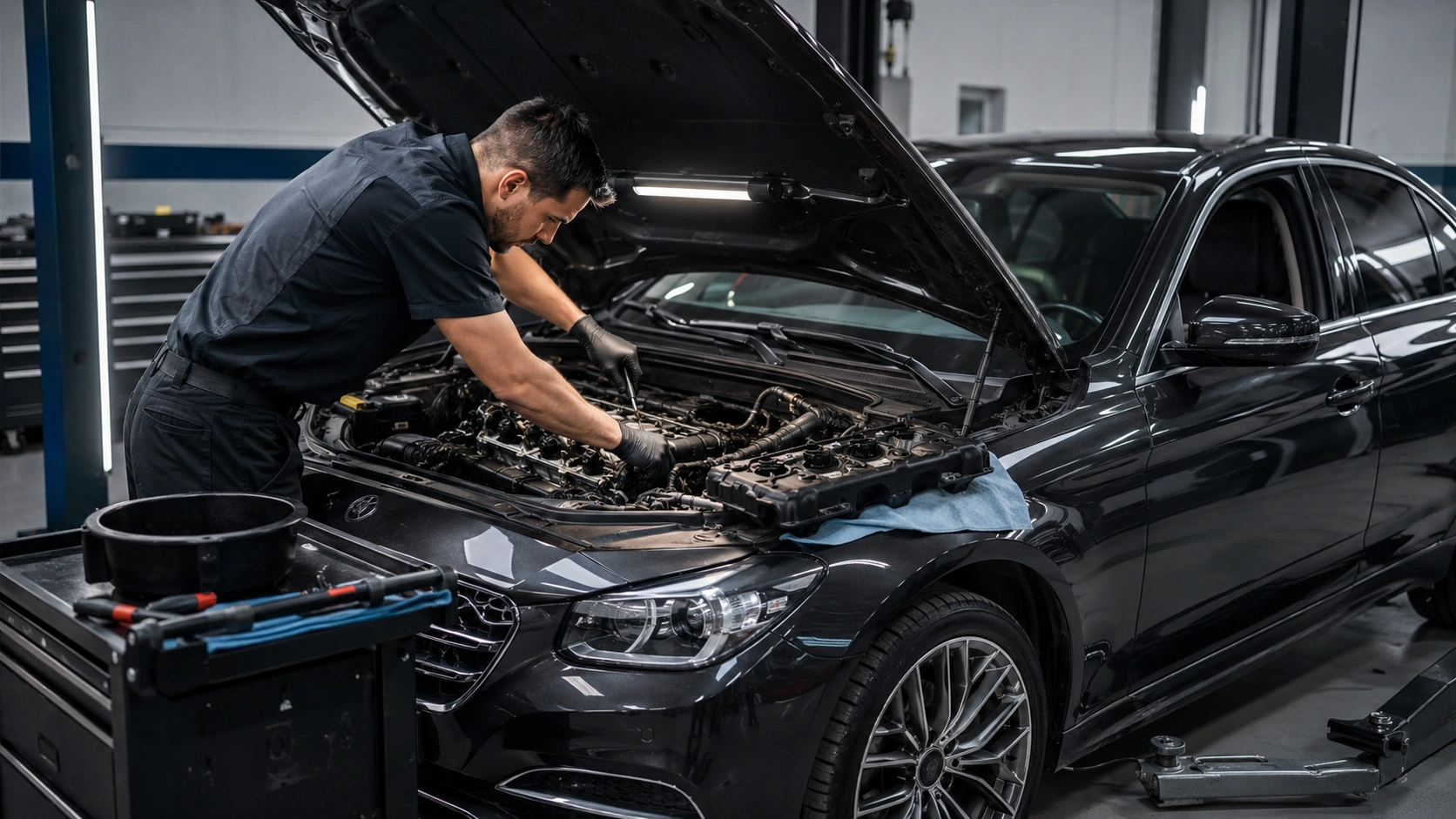
Start by cleaning the engine thoroughly. Once clean, inspect the engine after a short drive to identify fresh oil traces.
Pay close attention to:
- Valve cover gasket
- Oil filter
- Drain plug
- Oil pan
- Front crankshaft seal
- Rear main seal
- Timing cover
- Oil pressure sensor
Professional workshops may also use UV dye testing to accurately trace difficult leaks.
DIY Engine Oil Leak Inspection Checklist
Before visiting a workshop, you can perform a simple visual inspection.
Check Under the Car
Look for:
- Dark oil spots
- Fresh oil puddles
- Wet engine components
Inspect the Engine Bay
Look for:
- Greasy deposits
- Oil around the valve cover
- Oil near the oil filter
- Dirty engine surfaces
Check the Engine Oil Level
Use the dipstick to confirm the oil level. If it continues dropping despite recent top-ups, an oil leak is likely.
Notice Any Burning Smell
Oil dripping onto hot engine or exhaust components often produces a burnt oil smell while driving.
Watch the Dashboard
If the oil pressure warning light appears, stop driving as soon as it is safe to do so and check the engine oil level.
Can You Drive with an Oil Leak?
The answer depends on the severity of the leak.
Small Seepage
A minor seepage may allow you to drive short distances, provided the oil level is monitored closely.
Moderate Leak
Driving should be limited until the issue is inspected and repaired.
Major Leak
If you notice:
- Large oil puddles
- Rapid oil loss
- Oil warning light
- Engine overheating
Do not continue driving. Running an engine without sufficient oil can cause catastrophic engine damage within minutes.
How to Prevent Engine Oil Leaks
Preventive maintenance is the best way to reduce the risk of oil leaks.
Follow these simple practices:
- Change engine oil at the recommended intervals.
- Replace the oil filter during every oil change.
- Use the manufacturer-recommended engine oil grade.
- Replace worn gaskets and seals promptly.
- Avoid overfilling engine oil.
- Inspect the engine regularly for signs of leakage.
- Have the engine bay cleaned periodically to make leaks easier to detect.
- Schedule routine inspections with qualified technicians.
When Should You Visit a Workshop?
You should arrange a professional inspection immediately if you notice:
- Fresh oil stains beneath your vehicle
- A burning oil smell while driving
- Low engine oil levels despite recent top-ups
- Oil pressure warning light
- Blue-grey exhaust smoke
- Visible oil around the engine
- Heavy oil leakage after parking
Ignoring these warning signs can result in serious engine damage and significantly higher repair costs.
Why Professional Diagnosis Is Important
Finding the exact source of an oil leak isn't always straightforward. Oil can travel across engine components before dripping to the ground, making the original leak difficult to identify.
Professional technicians use specialized methods such as:
- UV dye leak detection
- Engine pressure testing
- Visual inspection with inspection lights
- Underbody examination
- Engine cleaning before diagnosis
These techniques help identify the actual source of the leak, ensuring the correct component is repaired rather than replacing parts unnecessarily.
Why Professional Engine Bay Cleaning Helps
A dirty engine bay can hide fresh oil leaks, making early diagnosis much more difficult.
Professional engine bay detailing helps:
- Remove grease and oil residue
- Reveal fresh leaks quickly
- Make inspections easier
- Reduce dirt accumulation around seals
- Improve the appearance of the engine compartment
- Support preventive maintenance
A clean engine doesn't prevent oil leaks, but it allows technicians to detect developing problems much earlier.
Why Choose Detailing Devils?
At Detailing Devils, we believe preventive maintenance is one of the best ways to protect your vehicle from expensive repairs.
Our professional detailing services help maintain your vehicle inside and out while making routine inspections easier.
Our premium services include:
- Ceramic Coating
- Graphene Coating
- Paint Protection Film (PPF)
- Engine Bay Detailing
- Interior Detailing
- Exterior Detailing
- Paint Correction
- Headlight Restoration
- Windshield Protection
- Wheel & Tyre Detailing
- Bike Detailing
- Luxury Car Detailing
With 140+ studios across India, trained detailing specialists, and premium automotive care products, Detailing Devils helps keep your vehicle cleaner, protected, and easier to maintain throughout its ownership.
Detailing Devils Expert Tip: During every scheduled service, ask your technician to inspect engine seals, gaskets, and the underside of the engine. Catching a small oil leak early can prevent thousands of rupees in future repairs.
Final Verdict: Fix Small Oil Leaks Before They Become Big Repairs
Engine oil leaks are one of the most common problems vehicle owners encounter, but they are also among the easiest to manage when detected early. Whether the leak is caused by a worn valve cover gasket, damaged oil pan gasket, loose drain plug, faulty oil filter, or aging engine seals, timely repairs can prevent major mechanical failures.
Ignoring even a small leak can lead to reduced oil levels, poor lubrication, overheating, increased engine wear, and expensive repairs. Regular inspections, timely oil changes, and prompt replacement of worn seals or gaskets are essential for maintaining your engine's health.
Remember, engine oil doesn't simply disappear. If your vehicle consistently loses oil or leaves stains where it's parked, it's important to identify the root cause instead of repeatedly topping up the oil.
By following your vehicle's recommended maintenance schedule and addressing leaks as soon as they appear, you can extend engine life, improve reliability, and avoid unexpected breakdowns.
Keep Your Engine Protected with Detailing Devils
A healthy engine starts with regular maintenance and proper care. While repairing oil leaks is essential, keeping the engine bay clean also plays an important role in identifying problems before they become costly repairs.
At Detailing Devils, we offer professional Engine Bay Detailing, Ceramic Coating, Paint Protection Film (PPF), Interior Detailing, and complete vehicle protection services designed to preserve your car's appearance and support long-term performance.
Visit your nearest Detailing Devils studio today and give your vehicle the expert care it deserves—from the engine under the bonnet to the shine on the paint.
FAQ
The most common causes include worn valve cover gaskets, damaged oil pan gaskets, loose oil drain plugs, faulty oil filters, and aging engine seals.
A minor seepage may allow short-distance driving if the oil level remains safe, but significant leaks or an illuminated oil pressure warning light require immediate attention. Continuing to drive with insufficient oil can seriously damage the engine.
The cost depends on the source of the leak. Simple repairs like replacing a drain plug washer may cost only a few hundred rupees, while repairs involving major engine seals can cost significantly more due to labour requirements.
No. Although a leak may appear less noticeable for a while, damaged seals or gaskets generally continue to deteriorate and should be repaired.
Common signs include oil spots beneath the vehicle, burning oil smell, low engine oil level, oil warning light, dirty engine bay, and blue-grey exhaust smoke (in some cases).
Yes. Excessive engine oil can increase internal pressure, potentially forcing oil past seals and gaskets, especially in older engines.
No. Engine bay detailing does not repair leaks, but it helps remove accumulated grease and dirt, making it much easier to identify fresh leaks during inspections.
It's a good practice to perform a visual inspection every month and have the engine professionally inspected during scheduled servicing or before long road trips.
Related Blogs:
- Best Car Cleaning Service in Noida - Find the best car cleaning services in Noida and keep your car looking new.
- Car Detailing Products - Discover the best products for car detailing and how to use them to achieve a professional shine.
- Detailing Services for Different Cars - Learn about the different types of detailing services available for different types of cars and which one is best for you.
- Car Detailing for Different Seasons - Find out how to prepare your car for different seasons with the right detailing methods and products.
- How to clean your car's interior - Learn the 8 best techniques and products for cleaning the interior of your car, including the seats, dashboard, and carpets.

