




Basic Parts of a Car and Their Functions Explained (2026 Beginner Guide)
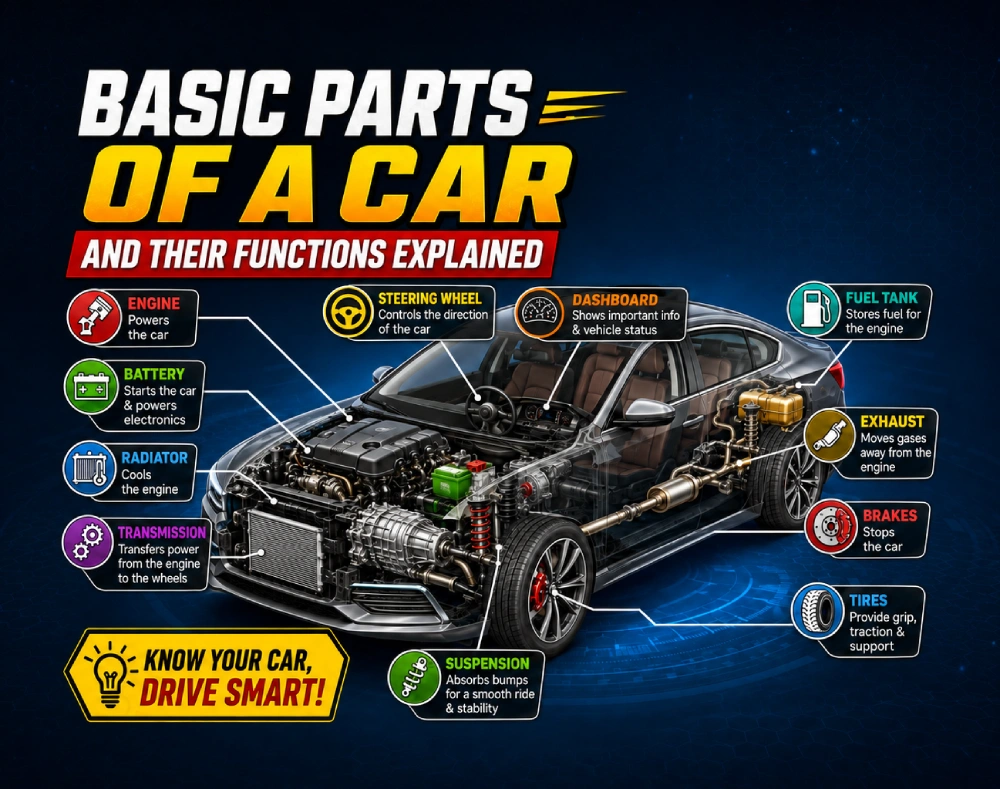
Quick Answer: What are the main components of a car? To understand how an automobile works, you need to know the basic parts of a car divided into six primary systems:
- The Engine (Powerhouse): Generates power by burning fuel (contains cylinders, spark plugs, radiator).
- The Transmission (Drivetrain): Transfers engine power to the wheels (gearbox, clutch).
- The Chassis & Body (Exterior): The structural frame and outer shell (bumpers, hood, windshield).
- The Suspension & Steering: Absorbs shocks and controls the car's direction (struts, shock absorbers, steering rack).
- The Braking System: Stops the vehicle safely (brake pads, rotors, calipers).
- The Electrical System: Powers electronics and starts the car (battery, alternator, ECU).
Buying your first car in India is a massive milestone. But let's be honest: the moment you pop the hood or your mechanic starts throwing around terms like "alternator," "brake calipers," or "spark plugs," it can feel like they are speaking a foreign language.
When you drive through the chaotic bumper-to-bumper traffic of Delhi NCR or navigate the massive potholes on Indian roads during the monsoon, your car is constantly working hard. Not knowing the automobile parts name or their functions can make you an easy target for overpriced repairs at local roadside garages.
You don't need to be a mechanical engineer to own a car, but understanding the parts of a car explained in simple terms will make you a smarter, safer, and more confident driver.
As India's leading automotive care experts at Detailing Devils, we believe in educating our customers. In this comprehensive 2026 beginner car guide India, we will break down the interior and exterior car parts, decode the engine bay, and share expert maintenance tips to keep your machine running flawlessly.
🚘 1. Exterior Car Body Parts (The Shell & Shield)
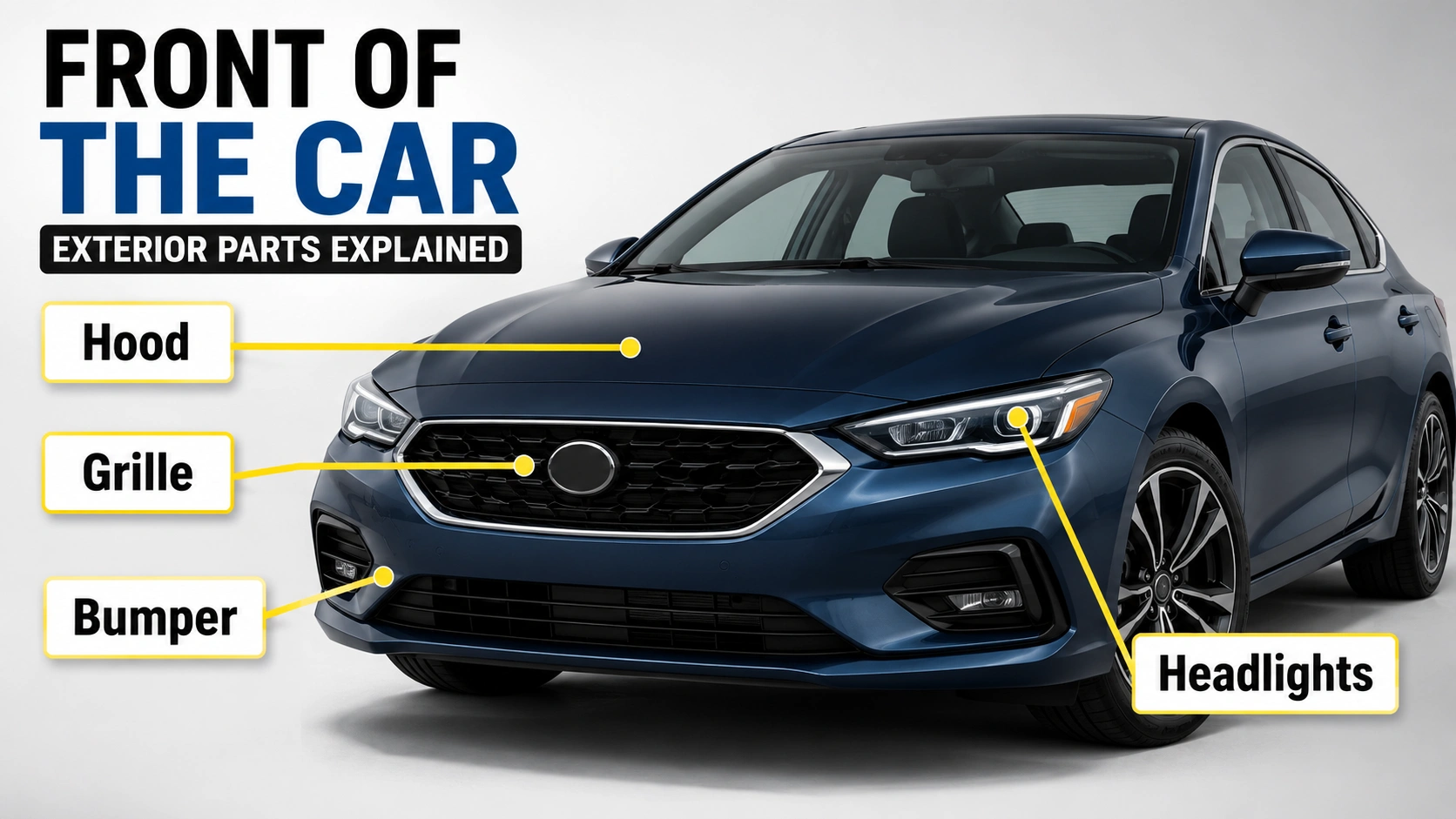
The exterior of your vehicle serves two main purposes: aerodynamics (reducing air resistance) and safety (protecting you in a crash). Let's look at the main car body parts.
| Part Name | Primary Function & Importance | Common Problems & Maintenance |
|---|---|---|
| Front Bumper | Designed to absorb the impact of a minor collision and protect the engine. | Highly prone to rock chips and scratches in Noida/Delhi traffic. Needs Dragon Paint Protection Film (PPF) for protection. |
| Front Grille | Allows cool air to flow directly into the radiator to prevent the engine from overheating. | Bugs and debris get stuck here. Requires regular washing. |
| Headlights & Fog Lamps | Illuminate the road ahead during night drives and foggy winters. | Plastic covers turn yellow over time due to UV rays. Requires professional Headlight Restoration. |
| Hood (Bonnet) | The hinged metal cover that protects the engine bay from rain, dust, and unauthorized access. | Factory clear coat fades under the hot Indian sun. Best protected with a 9H Nano Ceramic Coating. |
| Windshield | Made of laminated safety glass. Provides visibility while protecting passengers from wind and debris. | Can crack due to flying highway stones. (Read: Types of Windshield Cracks). |
⚙️ 2. Car Engine Parts (The Heart of the Vehicle)
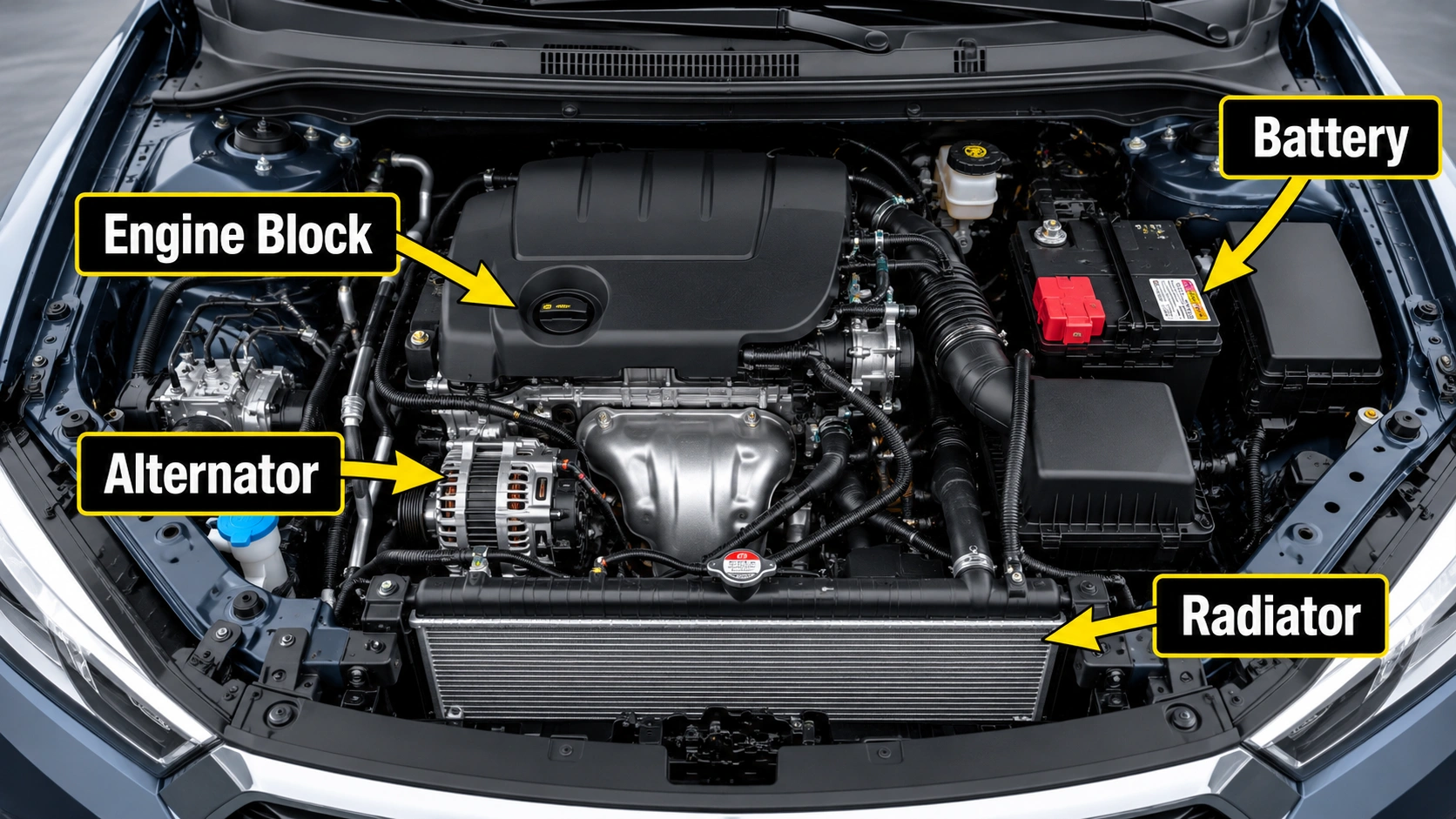
If the exterior is the shell, the engine bay is the beating heart. Understanding engine components explained simply will save you from major breakdown panic.
The Internal Combustion Engine (ICE)
Most cars in India run on Petrol or Diesel Internal Combustion Engines. Inside the heavy metal Engine Block, fuel and air mix and ignite in cylinders. This controlled explosion pushes pistons down, rotating the crankshaft, which ultimately spins your wheels.
Key Engine Bay Components:
- Radiator & Cooling System: An engine produces temperatures exceeding 1000°C. The radiator circulates a mixture of water and coolant through the engine to absorb this extreme heat and prevent melting. (Tip: Always use the Right Coolant for Your Car).
- Transmission (Gearbox): An engine spins too fast to connect directly to the wheels. The transmission uses gears to adjust the speed and torque delivered to the wheels. (Read our guide on Choosing the Best Automatic Transmission).
- Air Filter: Engines need oxygen to burn fuel. The air filter acts as a mask, catching the heavy dust of Indian roads before it can enter and choke the engine.
- Spark Plugs (Petrol Cars): Small electrical devices that create a tiny electric spark to ignite the petrol-air mixture inside the engine cylinders.
💡 Detailing Devils Expert Tip:
Dust, oil, and grime easily build up in the engine bay, causing wires to crack and rust to form. A professional Engine Detailing session safely degreases these components, helping your car run cooler and extending the life of rubber hoses.
🛋️ 3. Interior Car Parts (The Control Cabin)
The interior is where you experience the car. Beyond the obvious seats and AC vents, here are the crucial interior and exterior car parts you interact with daily.
- Steering Wheel & Column: Translates your hand movements into the turning of the front wheels. Most modern cars use Electric Power Steering (EPS) to make turning effortless.
- Instrument Cluster (Dashboard): The digital or analog screen behind the steering wheel. It houses the Speedometer (how fast you are going), Tachometer (Engine RPM), and crucial warning lights.
- Center Console: Houses the infotainment system, climate controls, and AC vents.
- Gear Shifter & Pedals: Manual cars have three pedals (Clutch, Brake, Accelerator), while automatic cars have two (Brake, Accelerator).
💡 Maintenance Note:
Indian summers cause extreme cabin temperatures. The UV heat can crack your leather seats and fade your dashboard. Always protect your cabin using premium Car Interior Detailing Services and leather conditioners.
🛑 4. Suspension & Braking System Parts
This is the system responsible for keeping you alive and comfortable.
Steering System Parts & Suspension Parts
When you hit a massive speed breaker in Gurgaon, why doesn't your spine shatter?
- Shock Absorbers & Struts: These fluid-filled cylinders absorb the massive physical shocks from uneven roads, ensuring the tires maintain contact with the ground. (Learn more: Types of Car Suspension in India).
- Control Arms: The metal links that connect the car's frame to the wheels, allowing them to move up and down over potholes.
Braking System Parts
Your car weighs over 1,000 kg. Stopping it requires immense friction.
- Brake Rotors (Discs) & Calipers: Attached to the front wheels (and often rear wheels). When you press the brake pedal, the caliper squeezes brake pads against the spinning metal disc to stop the car.
- Drum Brakes: Older technology often used on the rear wheels of budget cars. They use expanding "shoes" inside a metal drum to create friction. (Read the full debate: Drum Brakes vs Disc Brakes).
⚡ 5. The Electrical Parts of a Car (The Brain)
Modern cars are essentially computers on wheels. The electrical parts of car manage everything from fuel delivery to the music you play.
| Component | Function | What Happens if it Fails? |
|---|---|---|
| Car Battery | Provides the initial massive jolt of electricity to start the engine. | The car will click but refuse to start. Needs a jumpstart. (Guide: When to Replace Your Car Battery). |
| Alternator | A mini-generator driven by the engine. It recharges the battery while driving and powers the headlights/AC. | If it fails, the car will die entirely while driving. |
| ECU (Electronic Control Unit) | The absolute "Brain" of the car. It controls fuel injection, spark timing, and emission limits. | If damaged (often by water during cheap washes), the car becomes undrivable. (Read about ECUs here). |
⚠️ 6. Understanding Car Dashboard Symbols
One of the most terrifying moments for a beginner is seeing a red light flash on the dashboard. Vehicles use these car dashboard symbols to communicate their health.
- 🔴 Red Light: Severe Danger. Stop the car immediately (e.g., Low Engine Oil Pressure, High Engine Temperature).
- 🟡 Yellow Light: Warning. Get it checked soon (e.g., Check Engine Light, Low Tire Pressure).
- 🟢 Green/Blue Light: Information. A system is ON (e.g., High Beam Headlights).
👉 (Do not ignore these lights! Read our complete guide to Dashboard Warning Lights & Their Meanings to avoid paying lakhs in engine repairs).
🛠️ Common Problems by Part (Indian Context)
Because of the extreme dust, heat, and unpredictable road conditions in India, certain parts of a car wear out faster than global averages:
- Suspension Bushes: Often crack early due to deep potholes. You will hear a "clunking" sound over bumps.
- Brake Pads: Constant bumper-to-bumper city traffic wears out brake pads fast. If you hear a high-pitched squeak when braking, it's time for a replacement.
- Clear Coat (Paint): The topmost layer of your car's exterior. Frequent wiping with a dry, dusty cloth causes severe swirl marks.
🚀 Protect Your Car's Value with Detailing Devils
Understanding the car parts and functions is the first step toward becoming a responsible car owner. The second step is protecting those parts.
Your car is a massive financial investment. While a mechanic takes care of the internal engine, the exterior paint, delicate interiors, and hidden engine bay components need specialized protection against the brutal Indian weather.
At Detailing Devils, India's most trusted premium automotive care network with over 140+ studios, we specialize in high-end preservation.
- Stop minor scratches with self-healing Dragon PPF.
- Lock in a permanent wet-look shine with 9H Nano Ceramic Coating.
- Restore your faded cabin with our Premium Car Detailing Services.
📞 Book a Free Vehicle Inspection Today!
📍 Find a Detailing Devils Studio Near You
🙋♂️ Frequently Asked Questions (FAQs) About Car Parts
The 5 main components are the Engine, Transmission, Chassis (Frame), Suspension & Steering, and the Braking system.
Key engine parts include the engine block, pistons, crankshaft, camshaft, spark plugs, valves, and the radiator.
The engine creates the power by burning fuel, while the transmission (gearbox) controls that power and sends it to the wheels at the correct speed.
Common exterior parts include the front/rear bumper, hood (bonnet), grille, fenders, quarter panels, windshield, and roof.
The alternator acts as a generator. Once the engine is running, it generates electricity to power the car's electronics (AC, lights) and recharges the battery.
The Electronic Control Unit (ECU) is the car's computer. It manages engine performance, fuel efficiency, emissions, and safety features like airbags.
Disc brakes use calipers to squeeze flat metal rotors (like a bicycle brake), offering superior stopping power. Drum brakes use expanding shoes inside a metal cylinder and are generally found on older or budget cars.
The main electrical parts include the Battery, Alternator, Starter Motor, ECU, fuses, wiring harness, and all interior/exterior lights.
No, professional engine detailing safely degreases the engine bay. Experts wrap sensitive electrical parts (like the alternator and ECU) to prevent water damage while cleaning.
Related Blogs:
- Best Car Cleaning Service in Noida - Find the best car cleaning services in Noida and keep your car looking new.
- Car Detailing Products - Discover the best products for car detailing and how to use them to achieve a professional shine.
- Detailing Services for Different Cars - Learn about the different types of detailing services available for different types of cars and which one is best for you.
- Car Detailing for Different Seasons - Find out how to prepare your car for different seasons with the right detailing methods and products.
- How to clean your car's interior - Learn the 8 best techniques and products for cleaning the interior of your car, including the seats, dashboard, and carpets.

