




Car Tyre Pressure & Sizes Explained : The Simple Guide That Can Save Fuel, Tyres & Your Safety
Your tyres do more than carry your car. They decide how confidently you brake, how smoothly you corner, how much fuel your engine uses, and how safe your highway drive feels. Yet tyre pressure and tyre size are two of the most ignored parts of car maintenance.
The good news is simple: you do not need to be a mechanic to understand them. A quick monthly tyre pressure check and the right tyre-size knowledge can help you avoid uneven wear, poor mileage, rough rides, puncture risks, and expensive tyre replacements.
In this Detailing Devils guide, we break down car tyre pressure, PSI, tyre size markings, nitrogen vs compressed air, seasonal pressure changes, and the warning signs that your tyres need professional attention.
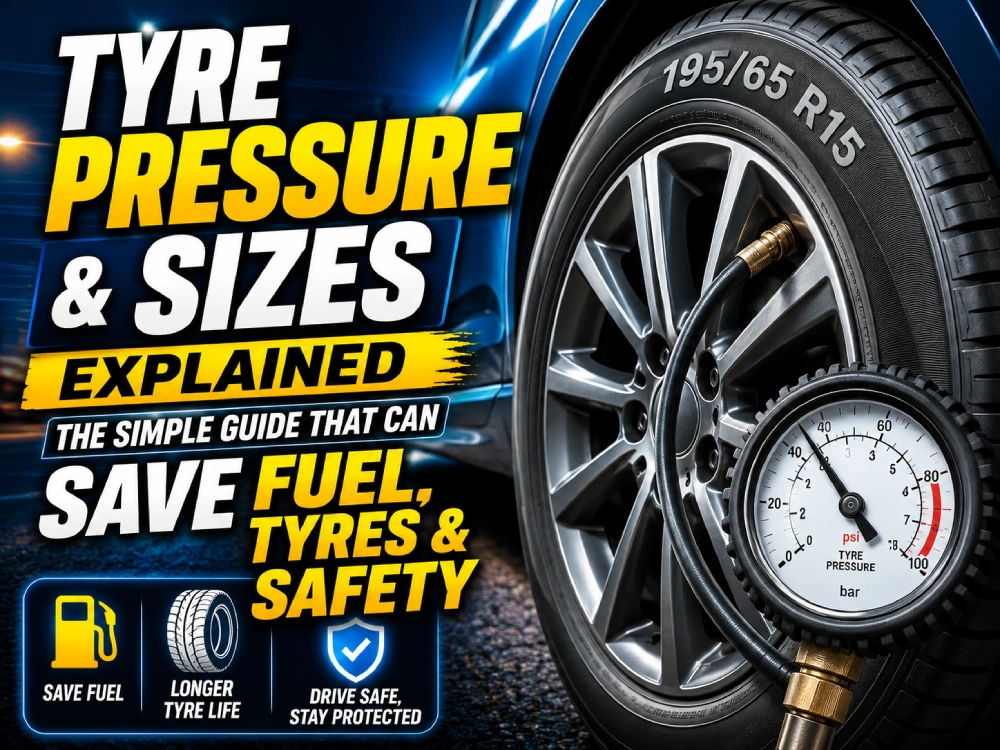
Detailing Devils Tip: For most passenger cars, the recommended cold tyre pressure usually falls around 30—35 PSI, but you should always follow the value recommended by your vehicle manufacturer.
What You'll Learn in This Guide
- What tyre pressure actually means
- Why correct PSI improves safety, mileage and comfort
- How to find and check the recommended pressure
- How to read tyre size codes like 195/65 R15 91H
- Nitrogen vs compressed air: what is actually worth it
- Maintenance tips, myths, replacement signs and FAQs
What Does Tyre Air Pressure Mean?
Tyre air pressure is the amount of air inside your tyre. It is usually measured in PSI, which means pounds per square inch, or in bar. This pressure supports the vehicle load and helps the tyre keep the correct shape while it rolls on the road.
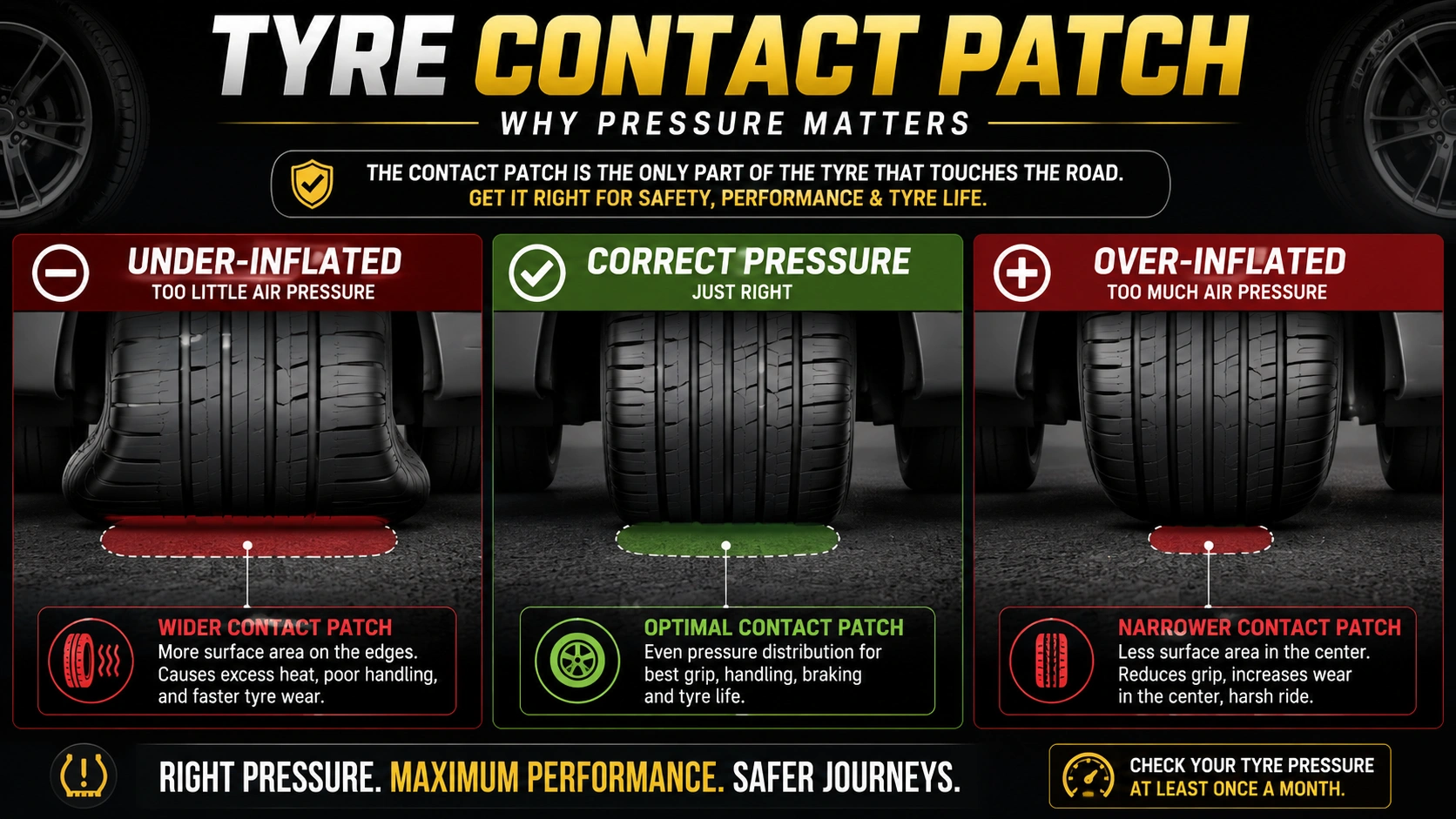
When the pressure is correct, the tyre makes proper contact with the road. When it is too low or too high, the contact patch changes. That one small change can affect braking, grip, tyre life, fuel efficiency and ride comfort.
This is why tyre pressure should not be treated as a petrol-pump formality. It is a basic safety check that every car owner should build into their monthly maintenance routine.
Why Correct Tyre Pressure Matters
1. Better Safety and Control
Under-inflated tyres become softer and flex more than they should. This extra flex creates heat, weakens the tyre structure and increases the risk of a blowout during high-speed driving or long highway runs.
Over-inflated tyres create the opposite problem. They become harder, reduce road contact and compromise grip. This can increase braking distance and make the vehicle feel unstable, especially on wet, broken or uneven roads.
Correct tyre pressure gives your car stable road contact, predictable steering and better control during sudden braking or lane changes.
2. Improved Fuel Efficiency
When tyres are under-inflated, rolling resistance increases. That means your engine needs to work harder to move the car, which can increase fuel consumption.
Maintaining the correct PSI helps your tyres roll more efficiently. It is one of the easiest ways to support better mileage without changing your driving style or spending on upgrades.
3. Longer Tyre Life
Tyres are not cheap, and incorrect pressure can shorten their life quickly. Under-inflated tyres often wear faster on the outer shoulders. Over-inflated tyres usually wear faster in the centre of the tread.
Correct pressure distributes the car's weight evenly across the tyre surface. This improves tread wear, helps the tyre last longer and reduces the chance of premature replacement.
4. Smoother Handling and Comfort
A car with low tyre pressure can feel heavy, slow to respond and unstable during cornering. A car with over-inflated tyres can feel bouncy and harsh over potholes, speed breakers and rough patches. The right pressure helps the suspension and tyres work together. The result is a smoother ride, balanced braking and better steering feedback.
How to Find the Recommended Tyre Pressure for Your Car
There is no universal tyre pressure for every car. The correct value depends on your vehicle model, tyre size, load, wheel setup and driving conditions. Always check the manufacturer-recommended value first.
- Owner's manual: The most reliable place to check recommended tyre pressure.
- Driver-side door placard: Many cars list tyre pressure on the door frame or B-pillar sticker.
- Fuel lid, glove box or bonnet area: Some manufacturers place the tyre-pressure label here.
- Manufacturer website or authorised service source: Useful if your manual is not available.
Detailing Devils Tip: Always check tyre pressure when tyres are cold. Driving heats the air inside the tyre and can temporarily increase the pressure reading.
Cold vs Hot Tyre Pressure: Why Timing Matters
Cold tyre pressure means the pressure reading taken before driving or after the car has been parked for a few hours. This is the most accurate time to check PSI because the tyre has not heated up from road friction.
Hot tyre pressure is usually higher because driving warms the tyre and expands the air inside it. If you check pressure right after a long drive, the reading may look higher than the actual cold-pressure requirement.
For the most dependable result, check the pressure in the morning or before a long trip. If you must check after driving, avoid reducing pressure aggressively unless you are following professional guidance.
How to Check Tyre Pressure in 5 Simple Steps
You can check tyre pressure at a petrol pump, tyre shop, service station or with a portable digital tyre inflator. The process takes only a few minutes.
- Find the recommended PSI for your car from the manual or tyre-pressure placard.
- Remove the valve cap from the tyre valve stem.
- Press the pressure gauge firmly onto the valve and read the PSI value.
- Inflate or deflate the tyre until it reaches the recommended pressure.
- Recheck the reading and tighten the valve cap properly.
Check all four tyres and do not forget the spare tyre. A spare wheel with low pressure is useless when you actually need it.
What Happens If Tyre Pressure Is Wrong?
| Pressure Issue | What It Can Cause | What You Should Do |
|---|---|---|
| Under-inflated tyres | Higher rolling resistance, overheating, shoulder wear, poor handling and longer braking distance. | Inflate to the manufacturer-recommended cold PSI and inspect for slow punctures. |
| Over-inflated tyres | Lower traction, harsher ride, centre tread wear and higher impact damage risk. | Release excess air carefully and recheck when tyres are cold. |
| Frequent pressure loss | Possible puncture, valve leak, rim issue or sidewall damage. | Get the tyre inspected by a professional instead of repeatedly topping up air. |
Tyre Sizes Explained: How to Read 195/65 R15 91H
Tyre size looks confusing at first, but every number and letter tells you something important about fitment, load capacity and performance. A common example is: 195/65 R15 91H.
- 195 — Tyre width: The tyre width in millimetres, measured from sidewall to sidewall.
- 65 — Aspect ratio: The sidewall height as a percentage of the tyre width. Here, the height is 65% of 195 mm.
- R — Radial construction: The most common tyre construction used in modern cars.
- 15 — Rim diameter: The wheel rim diameter in inches. The tyre must match this rim size.
- 91 — Load index: A code that indicates the maximum load the tyre can carry safely.
- H — Speed rating: A code that indicates the maximum speed capability of the tyre under proper conditions.
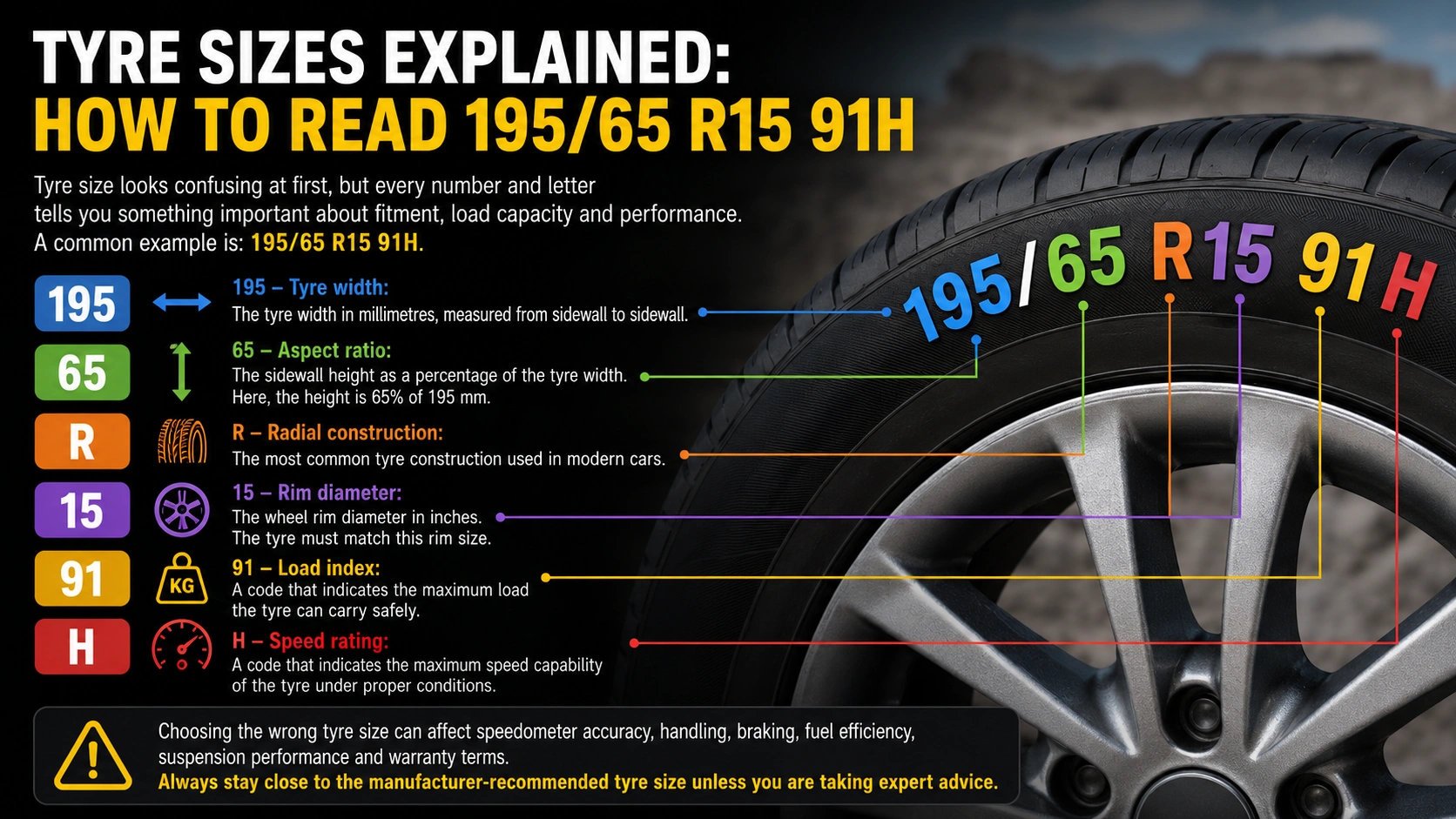
Choosing the wrong tyre size can affect speedometer accuracy, handling, braking, fuel efficiency, suspension performance and warranty terms. Always stay close to the manufacturer-recommended tyre size unless you are taking expert advice.
Should You Upsize or Downsize Tyres?
Upsizing means moving to a wider tyre or larger wheel setup. Downsizing means using a smaller width or rim setup. Many car owners consider upsizing for a sportier look and stronger road presence, but it should be done carefully.
- Keep the overall tyre diameter close to the original equipment size.
- Avoid large size variations because they can disturb speedometer accuracy and suspension geometry.
- Remember that wider tyres may improve grip but can reduce mileage and ride comfort.
- Check wheel-well clearance to avoid rubbing during turns or suspension movement.
- Consult a tyre specialist before changing from the manufacturer-recommended size.
Nitrogen vs Compressed Air: Which Is Better for Tyres?
Many tyre stations offer nitrogen filling as an upgrade. Nitrogen can provide better pressure stability because it contains less moisture and reacts less to temperature changes. However, for most daily-use cars, regular compressed air is still completely usable when pressure is checked regularly.
| Feature | Compressed Air | Nitrogen |
|---|---|---|
| Availability | Widely available at petrol pumps and tyre shops. | Less common and usually available at selected stations. |
| Cost | Often free or low cost. | Usually paid. |
| Pressure stability | Can vary more with temperature and moisture. | More stable in many conditions. |
| Best for | Everyday driving when checked regularly. | Highway-heavy use, performance vehicles or owners who prefer longer pressure stability. |
The smarter habit is not only choosing nitrogen or air. The smarter habit is checking tyre pressure on time and keeping it at the correct recommended level.
Seasonal Tyre Pressure Changes
Temperature affects tyre pressure. During colder weather, tyre pressure can drop. During hot weather or long highway driving, pressure can rise temporarily. This is why seasonal checks are important.
- In winter, check pressure more often because tyres may lose PSI faster in cold conditions.
- In summer, check pressure before highway drives and avoid relying only on hot readings.
- Before long trips, check tyre pressure, tread condition and visible tyre damage.
- Do not intentionally over-inflate tyres to "prepare" for weather changes. Follow the recommended PSI.
Detailing Devils Tyre Care Checklist
- Check tyre pressure once a month and before every long drive.
- Use the manufacturer-recommended cold PSI, not the maximum PSI printed on the tyre sidewall.
- Inspect tyres for cuts, cracks, bulges, nails and uneven tread wear.
- Rotate tyres every 8,000—10,000 km, or as recommended by your vehicle manufacturer.
- Get wheel alignment and balancing checked if the car pulls to one side or the steering vibrates.
- Do not ignore TPMS warnings if your vehicle has a tyre pressure monitoring system.
- Keep valve caps fitted to protect the valve from dust and moisture.
- Clean wheels and tyres regularly to remove brake dust, grime and road contaminants.
Common Tyre Pressure Myths You Should Stop Believing
Myth 1: "I can judge tyre pressure by looking at the tyre."
A tyre can look normal even when it is significantly under-inflated. Always use a pressure gauge instead of visual guessing.
Myth 2: "The PSI on the tyre sidewall is the recommended pressure."
The tyre sidewall usually shows the maximum pressure the tyre can handle, not the recommended pressure for your specific car. Follow the vehicle manufacturer's recommendation.
Myth 3: "Over-inflating tyres improves mileage, so it is better."
Over-inflation may reduce rolling resistance slightly, but it can reduce grip, make the ride harsh and cause uneven tread wear. Safety and control matter more than small mileage assumptions.
When Should You Replace Your Tyres?
Tyres should be replaced when they are no longer safe, even if they still hold air. Delaying replacement can compromise braking, wet grip and high-speed stability.
- Tread depth is below the safe/legal limit or the tread wear indicator is flush.
- Tyres are over 5—6 years old and rubber has started hardening or cracking.
- You can see cuts, bubbles, sidewall cracks or deep damage.
- The tyre loses pressure frequently even after repair.
- Uneven wear continues after alignment or balancing checks.
Final Word: A 5-Minute Check Can Protect Every Drive
Understanding tyre pressure and tyre size is not only for car enthusiasts. It is essential knowledge for every driver who wants safer braking, better mileage, smoother comfort and longer tyre life.
Make tyre checks a monthly habit. Know your correct PSI. Read your tyre size correctly. Avoid unsafe upsizing decisions. And when your tyres, wheels or vehicle finish need professional attention, visit your nearest Detailing Devils studio for expert car-care guidance and premium detailing solutions.
Want your car to look better, drive cleaner and stay protected? Connect with Detailing Devils today and book a professional car-care inspection at your nearest studio.
📞 Book a Free Vehicle Inspection Today!
📍 Find a Detailing Devils Studio Near You
FAQ
Check tyre pressure at least once a month and before long highway trips. Always check when the tyres are cold for the most accurate reading.
Many passenger cars fall around 30—35 PSI when tyres are cold, but the correct value depends on your car model and tyre size. Always follow your vehicle manufacturer's recommendation.
Some vehicles allow different front and rear sizes, especially performance cars. Do not mix sizes unless your vehicle manufacturer allows it or a tyre expert recommends it.
No. Reducing tyre pressure for rain is not recommended. Use the manufacturer-recommended pressure for safe handling and braking.
Nitrogen can offer better pressure stability, but it is not essential for most daily-use cars. Regular compressed air works well if you check PSI consistently.
Check the tyre sidewall, owner's manual, driver-side door placard or manufacturer information. The tyre size should match the recommended rim and load requirements.
Related Blogs:
- Best Car Cleaning Service in Noida - Find the best car cleaning services in Noida and keep your car looking new.
- Car Detailing Products - Discover the best products for car detailing and how to use them to achieve a professional shine.
- Detailing Services for Different Cars - Learn about the different types of detailing services available for different types of cars and which one is best for you.
- Car Detailing for Different Seasons - Find out how to prepare your car for different seasons with the right detailing methods and products.
- How to clean your car's interior - Learn the 8 best techniques and products for cleaning the interior of your car, including the seats, dashboard, and carpets.

