




EV vs Petrol Maintenance Cost: What Owners Should Know in 2026
The Indian automotive landscape is witnessing a historic shift. As we navigate through 2026, the choice between a traditional Internal Combustion Engine (ICE) vehicle and an Electric Vehicle (EV) is no longer just about environmental consciousness—it is a high-stakes financial decision. With the arrival of next-generation machines like the Mahindra BE 6 and the continued dominance of the Tata Nexon EV, Indian car owners are scrutinizing every rupee spent on "running costs".
For decades, we understood the predictable rhythm of a Petrol Car Service Cost. Today, we must weigh that against the emerging data on Electric Car Maintenance. While EVs promise fewer moving parts, they bring unique challenges like thermal management and specialized preservation needs. At Detailing Devils, we have observed that regardless of the powertrain, the true cost of ownership is dictated by how well you preserve the vehicle's components and its ultimate resale value.
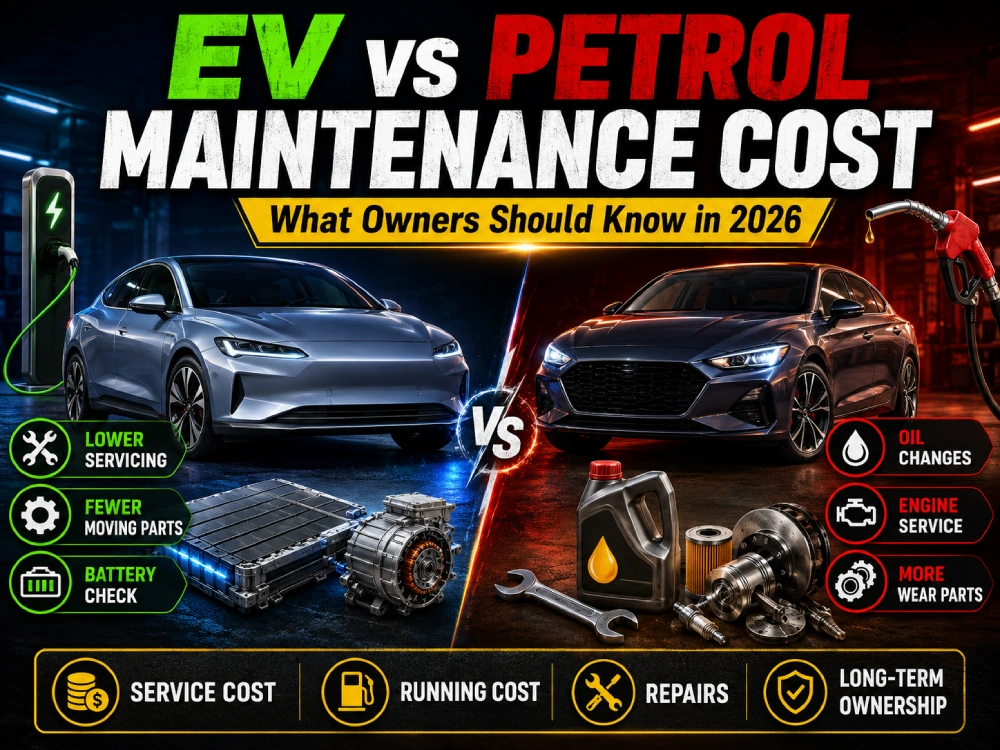
Compare EV vs petrol maintenance costs in India for 2026. Learn servicing, charging, battery care, insurance, resale value, and expert vehicle protection tips.
Quick Answer: EV vs Petrol Maintenance Cost in India
In 2026, Electric Vehicles (EVs) typically offer 30% to 50% lower periodic maintenance costs compared to petrol cars because they lack complex components like spark plugs, oil filters, and timing belts. However, EVs may face higher costs in tyre wear and insurance premiums. While petrol cars have lower upfront insurance and cheaper tyre replacement, their long-term costs are driven by rising fuel prices and complex engine servicing. For both, premium preservation through Dragon PPF and Ceramic Coating is essential to prevent depreciation.
1. Periodic Servicing: Engine vs. Motor
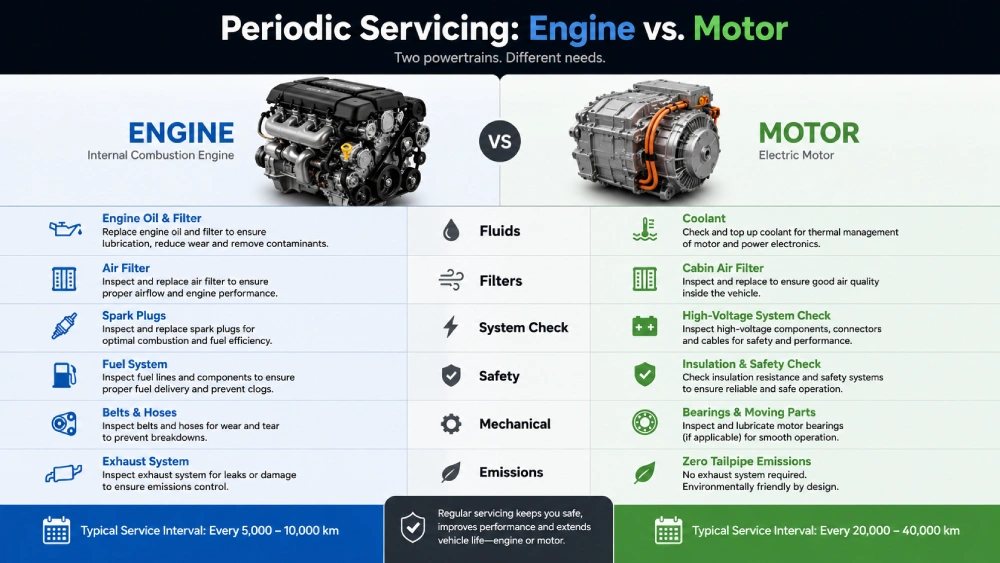
The most significant difference in EV vs Petrol Maintenance Cost lies in what happens under the hood.
Petrol Vehicles: A petrol engine is a symphony of thousands of moving parts. To keep it running, owners must account for regular Petrol Car Service Cost items including engine oil changes, oil filters, air filters, spark plugs, and coolant flushes. As a petrol car ages, the risk of expensive repairs like fuel injector cleaning or clutch plate replacement increases.
Electric Vehicles: An EV drivetrain is remarkably simple. There are no valves, pistons, or exhaust systems to maintain. Electric Car Maintenance is primarily focused on software updates, cabin filter changes, and checking the brake fluid. Because EVs use regenerative braking, their traditional brake pads often last much longer than those in petrol cars.
2. Fuel vs. Charging: The Running Cost Gap
In 2026, the price of petrol remains a volatile factor for Indian households.
- Petrol Running Costs: On average, a petrol car with a mileage of 15 km/l costs roughly ₹7–₹9 per kilometer, depending on current fuel prices.
- EV Charging Costs: Charging an EV at home using a standard AC charger is significantly cheaper, often bringing the cost down to ₹1–₹1.5 per kilometer. Even with the use of public DC fast chargers for long trips, the "fuel" savings of an EV remain its strongest financial selling point.
3. The Battery Factor: Long-term Risk and Care
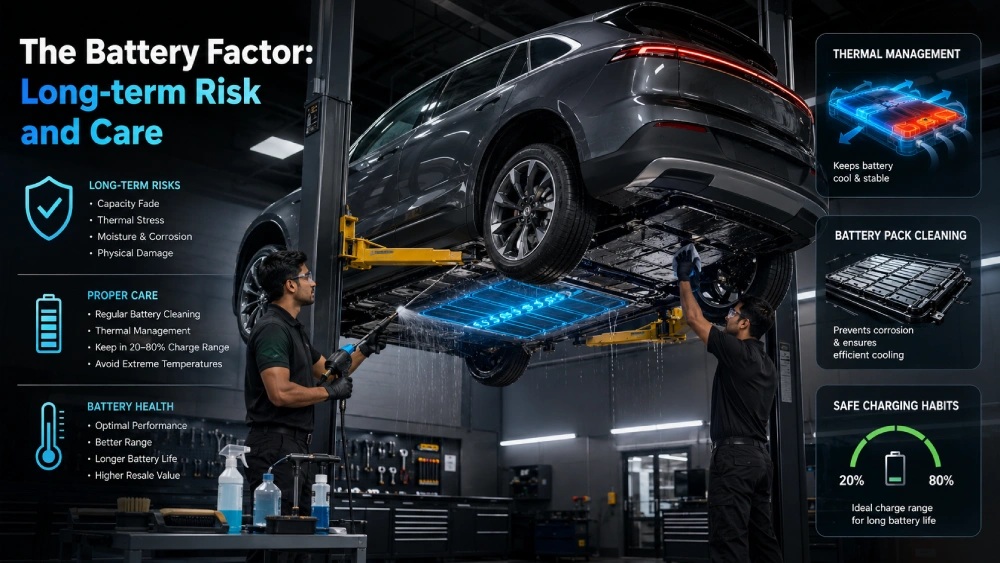
While the motor is simple, the battery is the "big ticket" item in EV Maintenance India. The battery pack can account for nearly 40-50% of the vehicle's total cost.
To avoid the catastrophic cost of out-of-warranty battery replacement, owners must follow strict EV Battery Care protocols:
- The 20-80% Charging Rule: Avoid frequent 100% charges to prevent cell degradation.
- Thermal Management: In India's 45°C summers, heat is a battery killer.
- Underbody Cleaning: Mud and road grime on the underbody can act as an insulator, trapping heat around the battery pack. Professional Underbody Cleaning at a studio like Detailing Devils is not just about aesthetics; it is a safety requirement for EV battery cooling efficiency.
4. Tyres and Insurance: The Hidden EV Costs
Many new owners overlook that EVs can be more expensive in two specific areas: tyres and insurance.
- Tyre Replacement: EVs are significantly heavier than petrol cars due to their massive battery packs. Combined with the instant torque they produce, this leads to faster tyre wear. EV owners often need Tyre Rotation every 5,000 km to maximize life.
- Insurance Premiums: Because EVs have a higher market value and require specialized repairs, their insurance premiums are typically 20-30% higher than those for equivalent petrol models in 2026.
5. Protecting Your Investment: The Detailing Devils Advantage
Regardless of whether you choose EV or petrol, environmental damage is the fastest way to lose money on your vehicle. The Indian climate—UV rays, hard water, and acidic dust—constantly attacks your clear coat.
Detailing Devils provides the ultimate defense to keep maintenance costs low and resale high:
- Paint Correction: Before any protection is applied, we use advanced Paint Correction to remove existing swirl marks and scratches, restoring a mirror-like finish.
- Ceramic Coating: Our flagship 9H Diamond Nano Armor creates a permanent, hydrophobic glass layer. This makes the car incredibly easy to wash and protects it from the UV oxidation that causes petrol cars to look "old" prematurely.
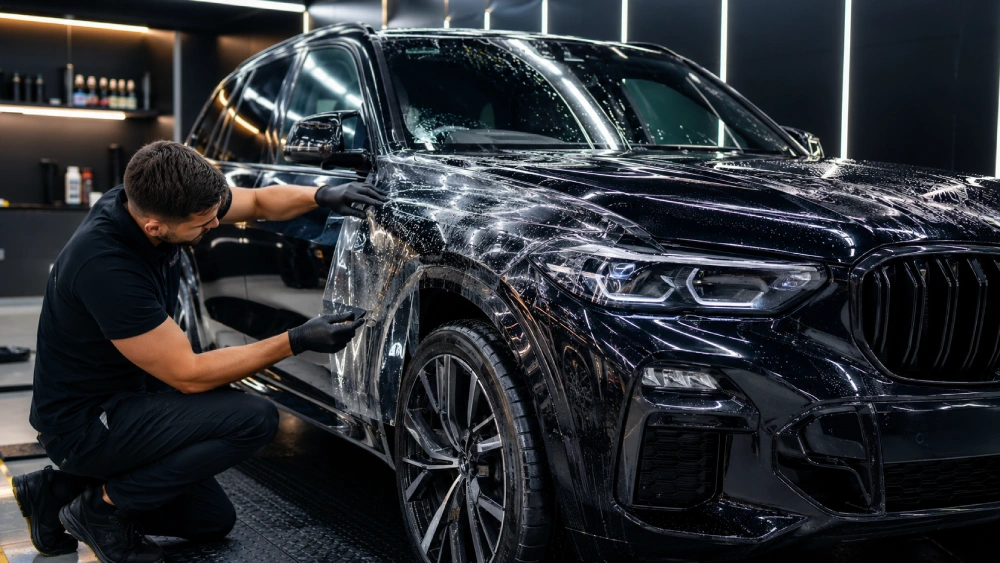
- Dragon PPF (Paint Protection Film): For those seeking total invincibility, Dragon PPF is a self-healing TPU film that absorbs high-speed rock chips and prevents key scratches. It is the smartest investment to keep your vehicle in "showroom condition" for a decade.
- Interior Detailing: EVs and petrol cars alike suffer from cabin wear. Our Interior Detailing includes deep sanitization and specialized Leather/Fabric Armor to prevent stains and odors.
6. Resale Value: Which Holds Its Worth?
Resale value is a critical part of the long-term cost equation.
- Petrol Resale: Highly predictable. A well-maintained petrol car with a full service history is always in demand.
- EV Resale: In 2026, EV resale is heavily tied to battery health. A vehicle that has been poorly maintained or lacks paint protection will depreciate faster.
- The Detailing Boost: Statistics show that professional detailing can increase a vehicle's trade-in value by 5% to 20%. A car with Ceramic Coating and a pristine interior instantly signals to a buyer that the vehicle has been cared for at a premium level.
7. Verdict: Which Is More Cost-Effective for You?
Choose an EV if:
- You drive more than 40–50 km daily.
- You have access to home charging.
- You prioritize low running costs and a silent, high-tech experience.
Choose a Petrol Car if:
- Your monthly running is low (less than 500 km).
- You frequently travel to areas with poor charging infrastructure.
- You prefer a lower upfront purchase price and lower insurance costs.
Preserve Your Passion with Detailing Devils
Whether you choose the futuristic efficiency of an EV or the classic power of petrol, your vehicle is one of your most significant investments. Don't let the harsh Indian environment steal its value. At Detailing Devils, we provide the world-class protection your machine deserves.
📍 Locate a Detailing Devils Studio Near You
📞 Book Your Free Paint Inspection & Consultation Today!
Frequently Asked Questions (FAQs)
In 2026, EVs have a lower annual maintenance cost because they don't require oil changes or complex engine repairs.
Yes. Beyond the shine, Ceramic Coating reduces surface tension, which can slightly improve aerodynamics and makes the car much easier to clean.
Yes, the extra weight and high torque of an EV battery pack put more stress on the rubber, leading to faster wear.
Regular Underbody Cleaning prevents mud from clogging the battery cooling fins, which is vital for maintaining range and safety in hot Indian climates.
Depending on the segment, a standard petrol car service (oil, filters, checks) costs between ₹8,000 and ₹15,000 annually, plus parts that wear out over time.
Yes, but it is best to perform Paint Correction first to ensure the film bonds perfectly and the original scratches aren't locked in.
Absolutely. For an EV, aesthetic condition is a primary indicator of how well the electronic systems and battery have been treated, often leading to a 10-15% higher resale price.
The long-term risk is the battery pack. Following a proper EV Battery Care Guide is the best way to ensure the battery lasts the full life of the vehicle.
See Also:
- Fastest Growing Franchises in India — Discover the fastest-growing franchise opportunities in India and learn which business sectors offer strong growth potential and attractive returns.
- Top 5 High Mileage Cars in India — Compare India's most fuel-efficient cars and find the best options for maximizing mileage while reducing fuel costs.
- E20 Petrol Concerns: Government Clarifies Its Impact on Vehicles — Understand what E20 petrol means for your vehicle, the government's latest clarification, and whether your car is compatible with the new fuel.
- Smart Ways to Extend Your Car Battery Life — Explore practical maintenance tips to improve your car battery's performance, increase its lifespan, and avoid unexpected breakdowns.
- Aluminum Wheel Cleaning & Polishing Guide — Find out the correct techniques, tools, and products to clean, polish, and protect aluminum alloy wheels for a long-lasting shine.

