




Guide to Saving Fuel While Driving | Best Fuel Saving Tips for Maximum Mileage
With fuel prices continuing to fluctuate, every driver wants to get the maximum mileage from every litre of fuel. While many people believe that fuel efficiency depends only on the type of vehicle they own, the truth is that driving habits play an equally important role.
Simple changes like maintaining a steady speed, servicing your vehicle regularly, and avoiding unnecessary idling can significantly reduce fuel consumption. Besides lowering your monthly fuel expenses, these habits also reduce engine wear, improve vehicle performance, and contribute to a cleaner environment.
Whether you drive daily in city traffic or frequently travel on highways, this expert guide will help you understand how small driving improvements can make a big difference over time.
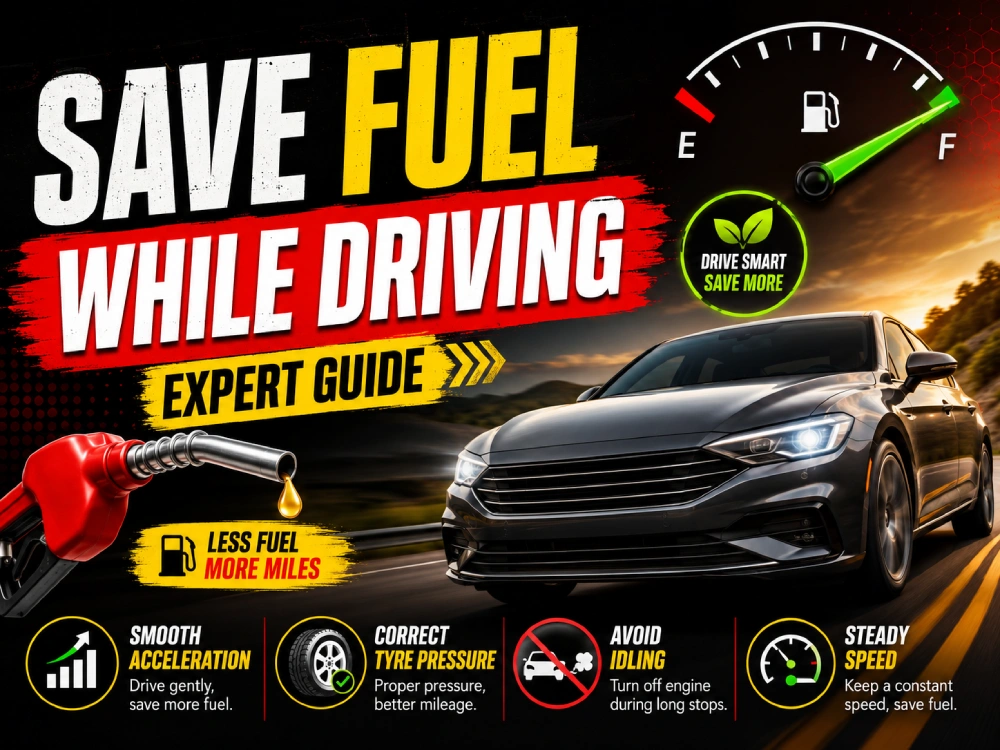
Why Fuel Efficiency Matters
Fuel-efficient driving isn't just about saving money at the fuel station. It also improves your vehicle's overall health and reduces long-term maintenance costs.
Some key benefits include:
- Lower fuel expenses
- Reduced engine wear
- Better vehicle performance
- Lower carbon emissions
- Increased resale value
- Longer engine life
Even improving your mileage by 10% can save thousands of rupees annually if you drive regularly.
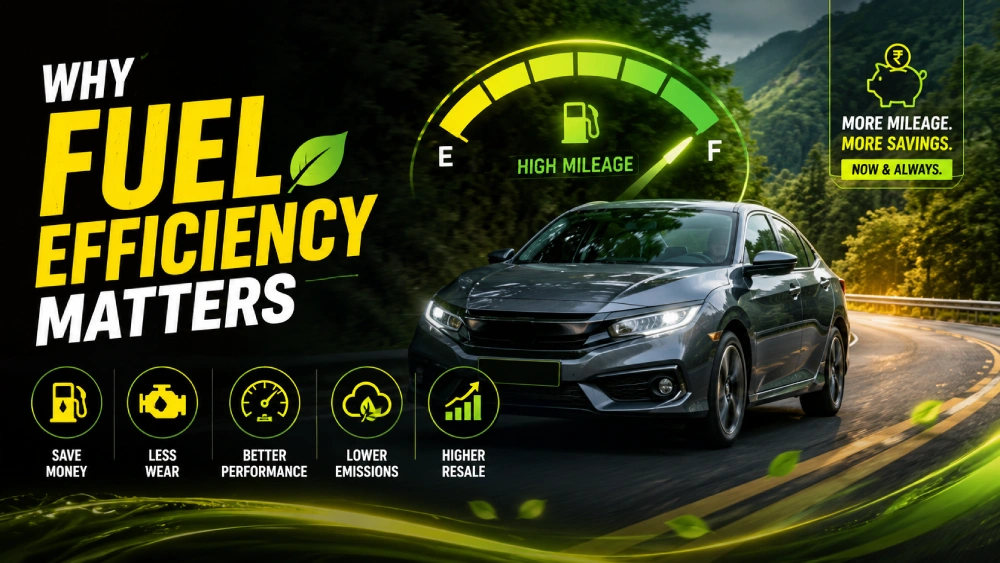
Drive Smoothly Instead of Aggressively
One of the biggest reasons for excessive fuel consumption is aggressive driving. Rapid acceleration and sudden braking force the engine to burn more fuel than necessary.
Instead, develop the habit of accelerating gradually and maintaining a consistent pace. Smooth driving keeps the engine working efficiently while reducing unnecessary fuel usage.
Maintain Proper Tyre Pressure
Tyres have a direct impact on fuel economy. Underinflated tyres increase rolling resistance, forcing your engine to work harder and consume more fuel.
Checking tyre pressure every two weeks is a simple habit that can improve mileage and extend tyre life.
Proper tyre pressure offers several advantages:
- Better fuel efficiency
- Improved handling
- Longer tyre lifespan
- Enhanced braking performance
- Better driving safety
Always follow the tyre pressure recommended by your vehicle manufacturer.
Avoid Excessive Engine Idling
Leaving your engine running while waiting at railway crossings, schools, or parking lots wastes fuel without moving the vehicle.
Modern engines are designed to restart efficiently, making it more economical to switch off the engine during longer stops.
Reduce Unnecessary Vehicle Weight
Every extra kilogram inside your car requires additional fuel to move.
Many people unknowingly carry unnecessary items such as:
- Heavy toolboxes
- Sports equipment
- Old luggage
- Water containers
- Unused accessories
Removing unnecessary weight helps improve fuel economy while reducing stress on the engine.
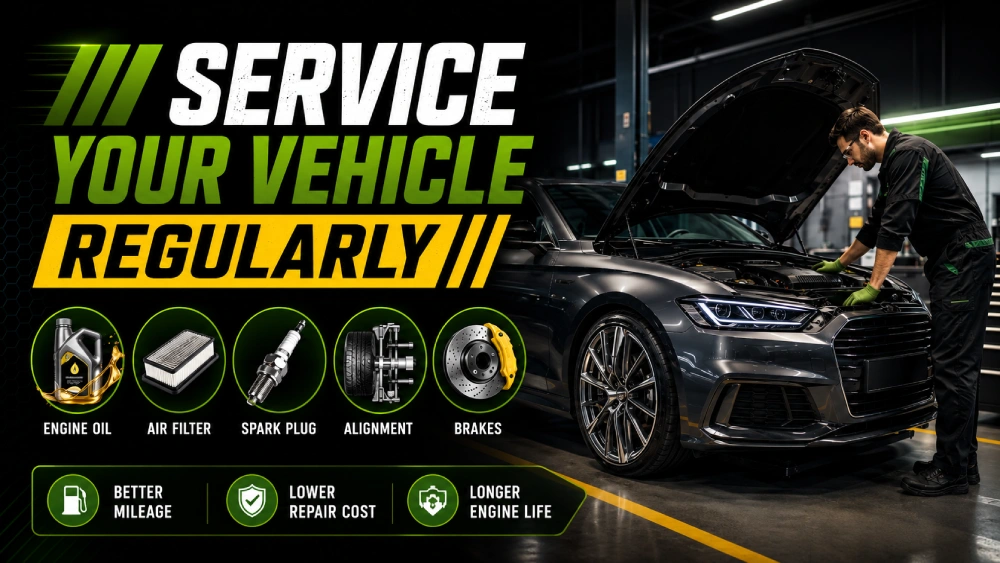
Service Your Vehicle Regularly
Routine maintenance plays a major role in fuel efficiency.
A properly maintained engine burns fuel more effectively than one suffering from clogged filters or worn-out components.
Essential maintenance includes:
- Engine oil replacement
- Air filter cleaning
- Fuel filter inspection
- Spark plug replacement
- Wheel alignment
- Brake inspection
A well-maintained vehicle not only delivers better mileage but also helps prevent costly repairs in the future.
Maintain a Constant Speed
Frequent acceleration and braking waste more fuel than driving at a steady speed.
On highways, maintaining a consistent speed helps the engine operate more efficiently. If your vehicle is equipped with cruise control, use it whenever road conditions permit.
Driving smoothly also reduces stress on engine components and tyres.
Use Air Conditioning Wisely
Air conditioning increases the load on the engine, especially during slow-moving city traffic.
Instead of running the AC at maximum cooling continuously, use moderate settings whenever possible.
Interestingly, driving with windows fully open at high highway speeds creates additional wind resistance, which can also reduce fuel efficiency.
The key is finding the right balance based on your driving conditions.
Plan Your Trips Efficiently
Making multiple short trips throughout the day often consumes more fuel than completing all your errands in one journey.
Planning your route helps you:
- Avoid traffic congestion
- Reduce total driving distance
- Save travel time
- Improve fuel economy
Navigation apps can also help identify the shortest and fastest routes.

Avoid Sudden Braking
Hard braking wastes the momentum your vehicle has already built.
Instead, observe traffic ahead and anticipate stops early. Maintaining a safe following distance allows you to slow down gradually rather than braking sharply.
Use Quality Fuel
Choosing fuel from trusted fuel stations helps maintain cleaner combustion and better engine performance.
Unless your manufacturer specifically recommends premium fuel, using regular fuel of the recommended octane level is usually sufficient.
Good-quality fuel contributes to cleaner injectors, improved combustion, and better long-term efficiency.
Common Fuel-Saving Mistakes to Avoid
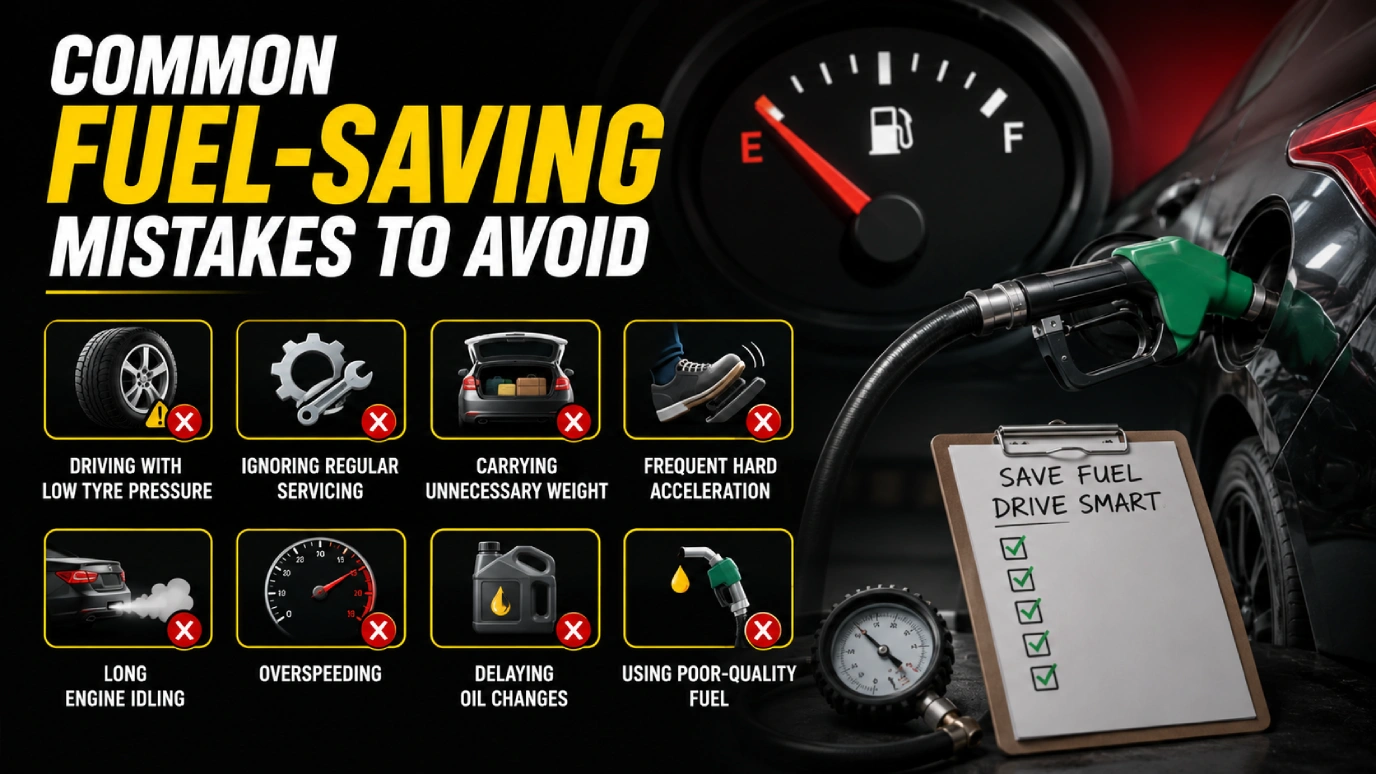
Many drivers unknowingly waste fuel through simple everyday habits.
Some common mistakes include:
- Driving with low tyre pressure
- Ignoring regular servicing
- Carrying unnecessary weight
- Frequent hard acceleration
- Long engine idling
- Overspeeding
- Delaying oil changes
- Using poor-quality fuel
Avoiding these mistakes can noticeably improve your car's mileage.
Expert Tips for Better Fuel Economy
Professional drivers and automotive experts recommend building a few simple habits that improve mileage over time:
- Drive smoothly instead of aggressively.
- Keep your tyres properly inflated.
- Avoid unnecessary engine idling.
- Remove excess weight from your vehicle.
- Follow your car's maintenance schedule.
- Use the correct engine oil grade.
- Maintain a steady highway speed.
- Plan your journeys to avoid traffic.
- Keep your air filter clean.
- Monitor your vehicle's fuel consumption regularly.
These small changes may seem minor individually, but together they can significantly reduce your fuel expenses over the course of a year.
Drive Smarter, Save More Fuel with Expert Car Care
Improving fuel efficiency starts with good driving habits, but regular vehicle maintenance is equally important. From tyre pressure checks and engine servicing to premium car detailing and preventive care, keeping your car in top condition helps maximize mileage and performance.
Looking for professional car care services? Trust the experts to keep your vehicle running efficiently and performing at its best. Book your next service today and enjoy a smoother, more fuel-efficient driving experience. 🚗💨 With 50+ studios across India, we make premium detailing easily accessible. Simply locate your nearest studio and book an appointment. Book Online Appointment Now
Final Thoughts
Saving fuel while driving isn't about making drastic changes—it's about building smarter driving habits that become second nature. From maintaining proper tyre pressure and servicing your vehicle regularly to avoiding harsh acceleration and planning your routes efficiently, every small improvement contributes to better fuel economy.
By following these expert tips, you'll enjoy lower fuel costs, improved vehicle performance, reduced maintenance expenses, and a more environmentally friendly driving experience. Every kilometre driven efficiently is money saved, making fuel-conscious driving one of the easiest ways to maximize the value of your vehicle.
Frequently Asked Questions (FAQs)
Driving smoothly, avoiding sudden acceleration and braking, and maintaining a steady speed are among the easiest and most effective ways to improve fuel efficiency.
Yes. Underinflated tyres increase rolling resistance, causing the engine to work harder and consume more fuel.
Yes. For most modern vehicles, turning off the engine during stops longer than one minute saves more fuel than prolonged idling.
Follow your vehicle manufacturer's recommended service schedule. Regular oil changes, clean air filters, and properly functioning spark plugs all contribute to better fuel efficiency.
Absolutely. Rapid acceleration, overspeeding, and sudden braking can significantly reduce your vehicle's mileage.
Only if your vehicle manufacturer specifically recommends premium fuel. Otherwise, using the correct fuel grade is sufficient for optimal performance.
Yes. Additional weight increases the engine's workload, resulting in higher fuel consumption and lower efficiency.
See Also:
- Fastest Growing Franchises in India — Discover the fastest-growing franchise opportunities in India and learn which business sectors offer strong growth potential and attractive returns.
- Top 5 High Mileage Cars in India — Compare India's most fuel-efficient cars and find the best options for maximizing mileage while reducing fuel costs.
- E20 Petrol Concerns: Government Clarifies Its Impact on Vehicles — Understand what E20 petrol means for your vehicle, the government's latest clarification, and whether your car is compatible with the new fuel.
- Top 5 Signs It's Time to Overhaul Your Car Engine — Discover the warning signs that indicate your car's engine may need a complete overhaul before minor issues turn into major repairs.
- Smart Ways to Extend Your Car Battery Life — Explore practical maintenance tips to improve your car battery's performance, increase its lifespan, and avoid unexpected breakdowns.
- Aluminum Wheel Cleaning & Polishing Guide — Find out the correct techniques, tools, and products to clean, polish, and protect aluminum alloy wheels for a long-lasting shine.

