




Car Paint Fading in Indian Weather: Causes, Prevention and Solutions
Indian weather is notoriously harsh on vehicles. From the blistering summer sun in the north to the high humidity of coastal regions, your vehicle's exterior is under constant environmental assault. Most car owners eventually notice their once-vibrant vehicle becoming dull and hazy—a phenomenon known as Car Paint Fading. Understanding why this happens and how to implement effective Car Paint Care is essential for maintaining both the aesthetic appeal and the long-term resale value of your investment.
Learn what causes car paint fading in Indian weather and discover expert tips to protect your vehicle with Ceramic Coating, PPF, and professional detailing.
What Causes Car Paint Fading in India?
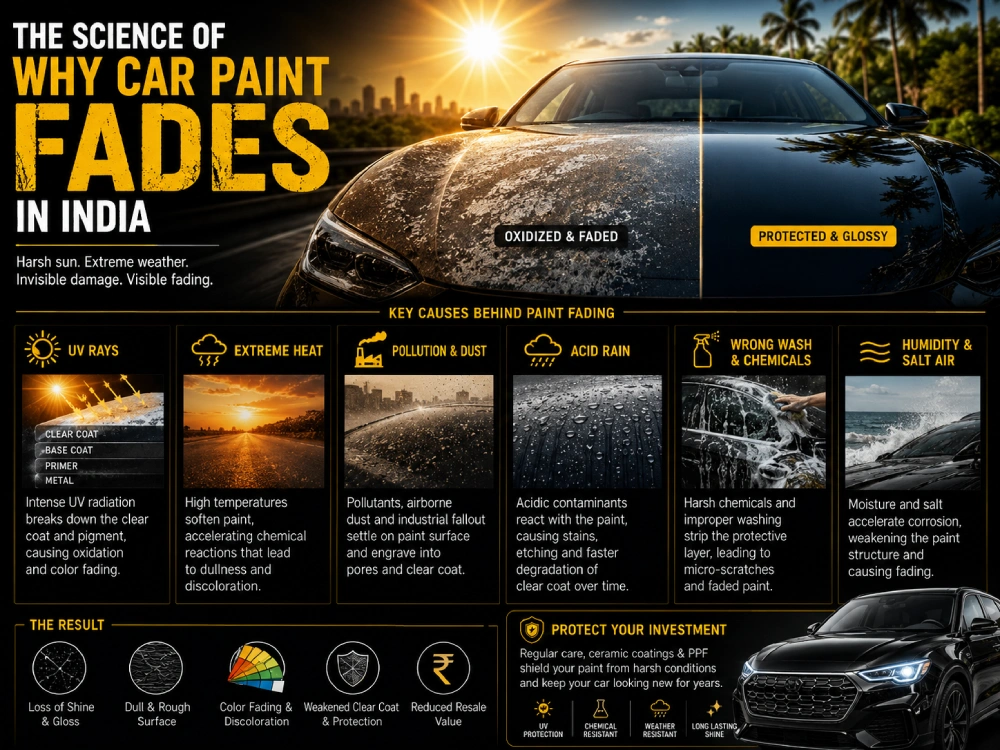
Car Paint Fading in India is primarily caused by intense UV rays and extreme heat, which trigger chemical oxidation in the paint's clear coat. This degradation is worsened by environmental contaminants like industrial pollution, acid rain, hard water minerals, and acidic substances like bird droppings and tree sap. To effectively ensure Car Paint Protection, owners should utilize professional solutions such as Ceramic Coating India or Paint Protection Film (PPF), alongside regular maintenance like professional Car Washing and Paint Correction.
1. The Science of Why Car Paint Fades in India
The primary driver of paint degradation in the Indian subcontinent is the relentless sun. India experiences some of the highest UV index levels globally, especially during the long summer months.
UV Rays and Oxidation
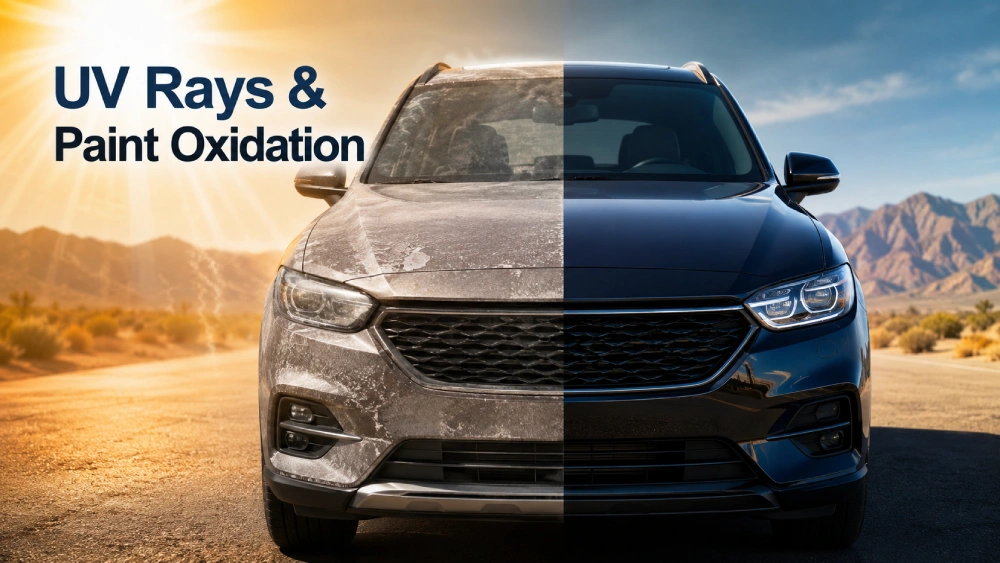
Ultraviolet (UV) radiation acts as a catalyst for oxidation. When the sun's energy hits the vehicle's surface, it breaks down the polymer bonds in the paint and clear coat. This chemical reaction makes the paint porous and brittle, leading to a "chalky" appearance. Owners of dark-colored cars, such as black or deep red, often notice this faster because dark pigments absorb more heat, accelerating the oxidation process.
Extreme Heat Impact
It isn't just the light; it's the temperature. Metal body panels can reach temperatures exceeding 70°C when parked in direct sunlight. This heat causes the metal to expand and contract, which can create microscopic cracks in the paint layer, allowing moisture and pollutants to seep in further. For more insights, read our guide on tips for maintaining your vehicle in extreme heat.
2. Environmental Culprits: Beyond Just the Sun
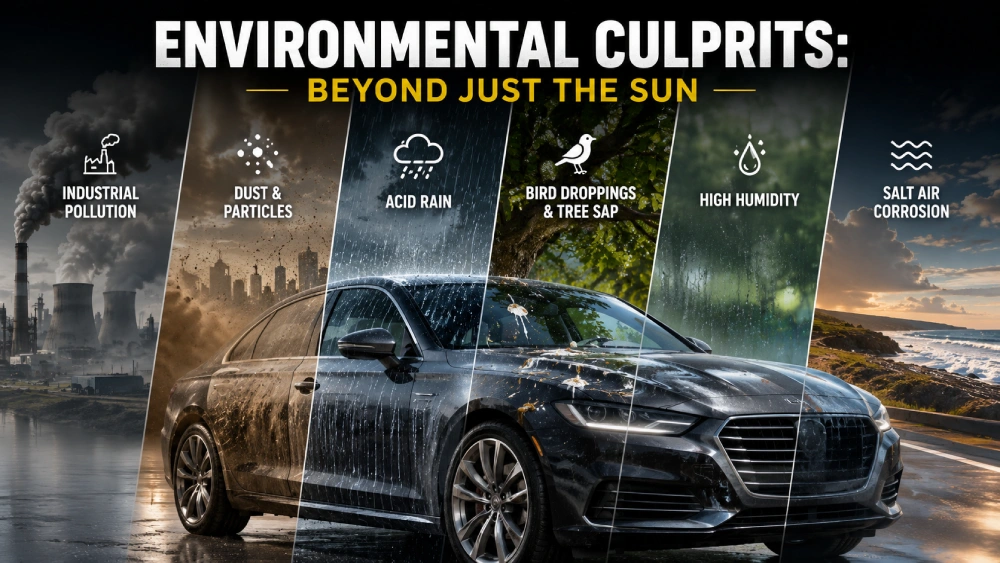
While the sun is the primary cause, several other "silent killers" contribute to the rapid fading of car paint in Indian cities.
- Industrial Pollution: Modern cities are filled with soot, metallic dust, and chemical fallouts. These particles settle on the paint and, if not removed, can become "baked" into the surface by the sun, leading to permanent staining and dullness.
- Acid Rain: In industrial hubs, rainwater often carries acidic pollutants. When this water evaporates on a hot car, it leaves behind concentrated acidic spots that etch into the clear coat.
- Bird Droppings and Tree Sap: These are highly acidic (pH 3 to 4.5). If left for even a few hours under the sun, they can eat through the clear coat and leave permanent "burn" marks on the paint.
- Hard Water: Most people in India wash their cars using borewell or municipal water high in calcium and magnesium. As the water evaporates, these minerals leave behind stubborn white "hard water spots" that are incredibly difficult to remove and damage the paint's gloss over time.
- Improper Washing: Using a single bucket and a dirty cloth is common practice in India. This drags abrasive dirt across the paint, creating thousands of micro-scratches or "swirl marks" that scatter light and make the paint look faded even if the color is intact. Discover more in our car wash tips and tricks.
3. Practical Prevention Tips for Every Owner
You don't always need to spend a fortune to slow down the fading process. Simple habit changes can provide significant Car Paint Protection.
- Park in the Shade: Whenever possible, use covered parking or basement lots. If shade is unavailable, invest in a high-quality, breathable car cover.
- The Two-Bucket Wash Method: To avoid swirl marks, use one bucket for soapy water and another for rinsing your microfiber mitt. This ensures you aren't putting dirt back onto the car.
- Regular Decontamination: Use a clay bar treatment every few months to remove embedded pollutants that a standard wash cannot touch.
- Quick Removal of Acids: Keep a spray bottle of water and a microfiber cloth in your trunk. If you see bird droppings or tree sap, clean them immediately before they have a chance to bake in the sun.
4. Professional Solutions for Ultimate Protection
For those who want to "lock-in" the showroom shine and prevent fading for years, professional nanotechnology is the only answer.
Ceramic Coating India
Ceramic Coating India has become the go-to choice for long-term paint preservation. Unlike wax, which melts in the heat, a ceramic coating is a liquid polymer (typically Silicon Dioxide or SiO2) that chemically bonds with the factory paint to create a semi-permanent layer of glass.
- Benefits: It provides superior UV resistance, extreme hydrophobicity (water-beading), and a high-gloss finish. It acts as a sacrificial layer against acid rain and bird droppings.
- Detailing Devils Exclusive: Our 9H Diamond Nano Armor offers one of the hardest protective layers available, specifically formulated for the Indian climate.
Paint Protection Film (PPF)
If you are looking for the "ultimate armor," Paint Protection Film is the solution. PPF is a thick, transparent Thermoplastic Polyurethane (TPU) film applied over the entire vehicle.
- Dragon PPF: Our flagship Dragon PPF is a self-healing film. If it gets minor scratches from road debris or improper washing, the heat from the sun will actually "heal" the film, making the scratches disappear. It provides the best physical shield against rock chips and harsh environmental fading.
5. The Role of Paint Correction and Detailing
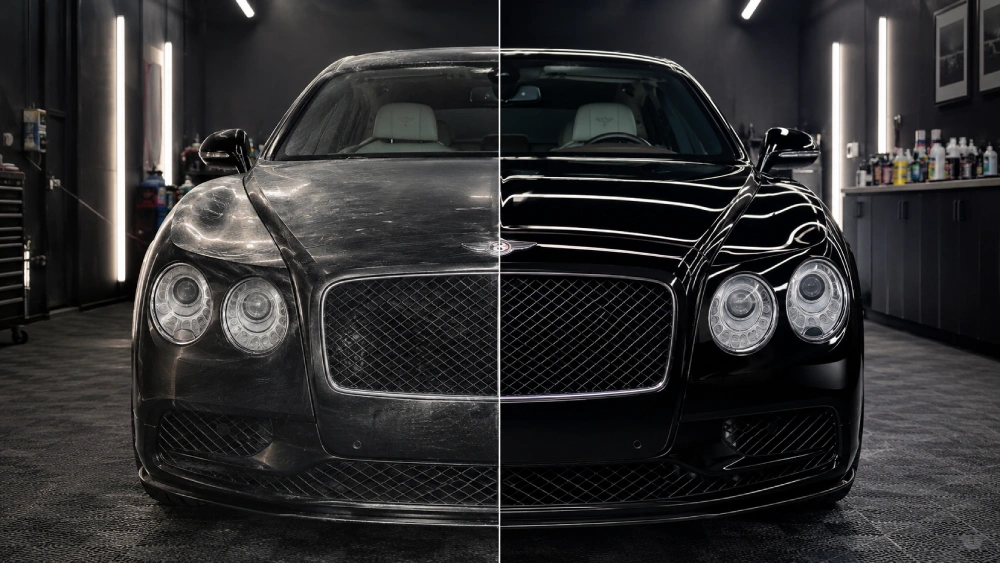
You cannot protect a damaged surface. If your car is already showing signs of fading or swirl marks, the first step is Paint Correction.
Paint Correction
This process involves using specialized machines and abrasive compounds to carefully shave away a microscopic layer of the damaged clear coat. This removes the oxidized paint and levels out scratches, revealing a fresh, vibrant layer of paint underneath. This is a mandatory step before applying any Ceramic Coating or PPF. Learn about the science of scratches to understand this better.
Exterior Detailing
Professional Exterior Detailing is a deep-cleaning process that goes far beyond a standard car wash. It includes chemical decontamination of wheels, iron fallout removal from the paint, and restoration of faded plastic trims. At Detailing Devils, we ensure every inch of your vehicle's exterior is revived to its peak condition.
6. Maintenance Advice to Preserve Your Shine
Once you have invested in professional protection, maintaining it is key to ensuring it lasts its full warranted life.
- Avoid Automatic Car Washes: The stiff brushes in automatic washes can mar even the hardest ceramic coatings.
- Use pH-Neutral Shampoos: Harsh detergents strip away the hydrophobic properties of coatings. Always use a dedicated pH-neutral car shampoo.
- Professional Foam Washes: Regular visits for a professional foam wash help safely remove road grime without introducing new scratches.
- Yearly Inspections: Bring your car back to a Detailing Devils studio for a yearly inspection. We use specialized chemicals to "de-clog" the coating and apply top-ups to maintain maximum gloss and protection.

7. Conclusion: Preserve Your Passion
Your car's paint is its first line of defense and its most visible feature. While the Indian weather is aggressive, you don't have to accept a faded, dull vehicle as an inevitability. By combining smart habits with professional solutions like Dragon PPF and Ceramic Coating, you can ensure your car remains in "showroom condition" for a decade, significantly boosting its trade-in value when it's time to upgrade.
At Detailing Devils, we have helped over 140+ communities across India transform and protect their rides. Don't let the sun steal your car's shine.
📍 Locate a Detailing Devils Studio Near You
📞 Book Your Free Paint Inspection Appointment Today!
Frequently Asked Questions (FAQs)
Darker pigments absorb more infrared heat from the sun. This higher surface temperature accelerates the chemical oxidation process of the paint's clear coat, leading to visible fading much sooner than on lighter vehicles.
Yes. A high-quality Ceramic Coating contains UV inhibitors that act like sunscreen for your car, blocking the radiation that causes oxidation and fading.
In many cases, yes. Through professional Paint Correction, the oxidized, dull layer of the clear coat can be removed to reveal the healthy paint underneath. However, if the fading has reached the base coat (the color layer), a repaint may be necessary.
In 2026, the car wash and detailing price guide suggests that for a hatchback, prices typically range from ₹12,000 to ₹30,000, depending on the package and warranty.
Both are excellent, but they serve different needs. Ceramic coating is best for gloss and chemical protection (acid rain, bird droppings). Paint Protection Film (PPF) is superior for physical protection against rock chips and scratches.
No. Household soaps are often highly alkaline and can strip the protective properties of a ceramic coating or dry out the polymers in a PPF, leading to premature failure.
Absolutely. Data shows that a professionally detailed car can fetch a 5% to 15% higher resale price because the pristine exterior and interior signal to the buyer that the vehicle has been exceptionally well-maintained.
For the best results, a full professional detail is recommended every 6 to 12 months, depending on your driving conditions and whether the vehicle is parked outdoors daily.
See Also:
- Fastest Growing Franchises in India — Discover the fastest-growing franchise opportunities in India and learn which business sectors offer strong growth potential and attractive returns.
- Top 5 High Mileage Cars in India — Compare India's most fuel-efficient cars and find the best options for maximizing mileage while reducing fuel costs.
- E20 Petrol Concerns: Government Clarifies Its Impact on Vehicles — Understand what E20 petrol means for your vehicle, the government's latest clarification, and whether your car is compatible with the new fuel.
- Smart Ways to Extend Your Car Battery Life — Explore practical maintenance tips to improve your car battery's performance, increase its lifespan, and avoid unexpected breakdowns.
- Aluminum Wheel Cleaning & Polishing Guide — Find out the correct techniques, tools, and products to clean, polish, and protect aluminum alloy wheels for a long-lasting shine.

