




ADAS in Cars Explained : Features, Benefits and Hidden Risks (2026)
The year 2026 represents a landmark shift in the Indian automotive market, with Car Safety Technology moving from a luxury add-on to a standard expectation. Leading this revolution is Advanced Driver Assistance Systems (ADAS), a sophisticated suite of electronic features designed to enhance vehicle safety and driver convenience. From the high-tech cockpits of the latest SUVs to entry-level hatchbacks, ADAS in Cars is transforming how we navigate the complex and often unpredictable Indian road conditions.
However, while ADAS Features offer a protective "safety bubble" around your vehicle, they also introduce new maintenance requirements and potential risks if not properly understood. At Detailing Devils, we recognize that these high-tech sensors and cameras require specialized protection—ranging from Dragon PPF to advanced Windshield Armor—to ensure they function accurately throughout the vehicle's life.

Learn everything about ADAS in cars, including top features, benefits, hidden risks, maintenance tips, and why ADAS is transforming road safety in India.
Featured Snippet: What is ADAS in Cars?
Advanced Driver Assistance Systems (ADAS) are electronic technologies that assist drivers in driving and parking functions to improve safety. Using a network of sensors, cameras, and an Electronic Control Unit (ECU), ADAS can detect obstacles, monitor lane markings, and even intervene by applying brakes or steering to avoid collisions. Popular ADAS Features include Adaptive Cruise Control, Automatic Emergency Braking (AEB), and 360-degree Cameras, which have become a major factor in determining ADAS Cars India safety ratings.
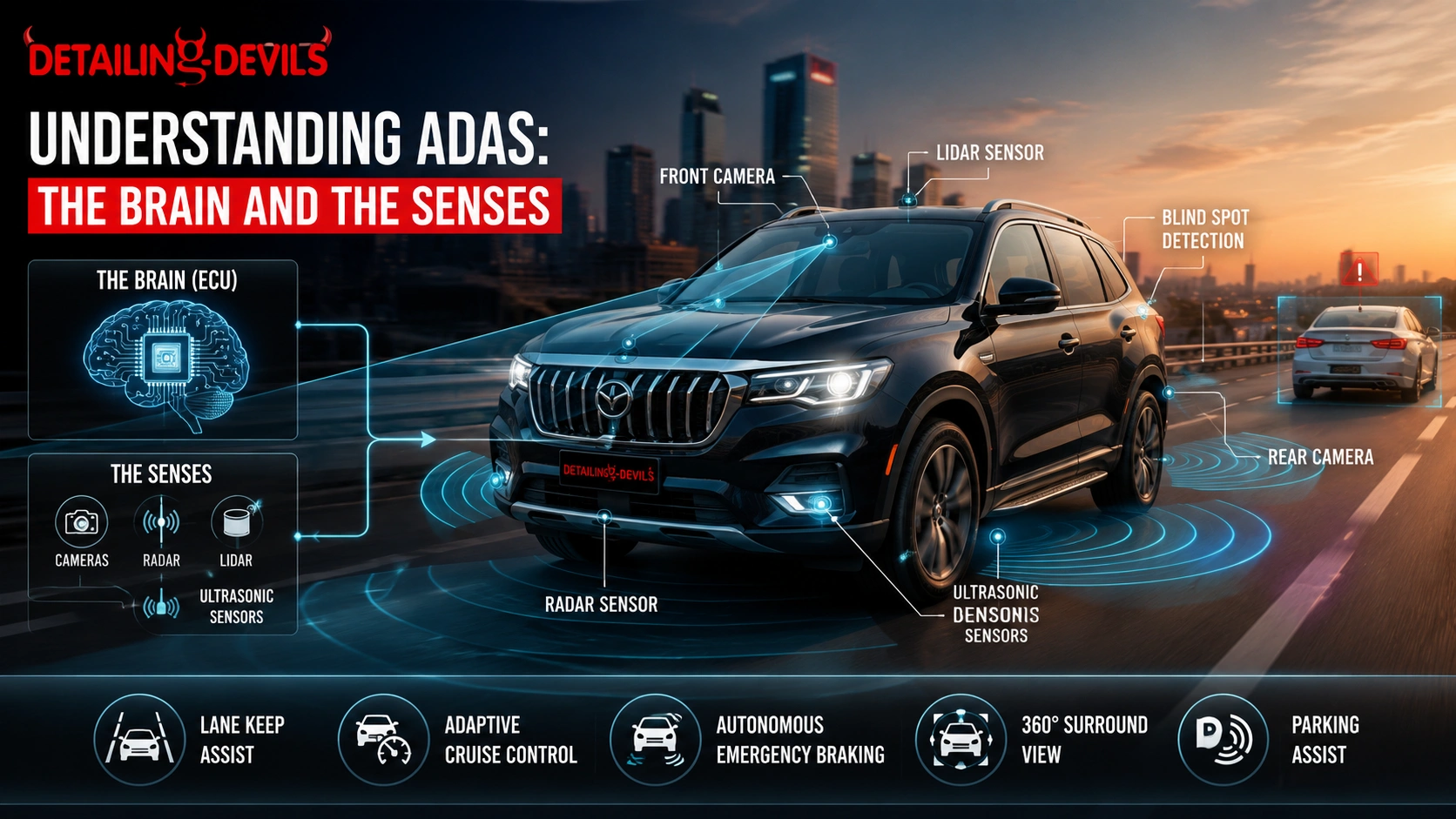
1. Understanding ADAS: The Brain and the Senses
To appreciate the power of Advanced Driver Assistance Systems, one must look under the "skin" of the modern car. ADAS is not a single part but a complex ecosystem of hardware and software.
- Sensors and Radars: These act as the vehicle's "feelers," typically mounted behind the front grille or bumper to measure distance from other cars.
- Cameras: Mounted on the windshield and around the vehicle, these provide the "eyes" to read traffic signs and lane markings.
- The ECU (The Brain): The Electronic Control Unit processes thousands of data points per second to make split-second decisions like applying the brakes.
Because these components are highly sensitive, any physical damage or even excessive dust can impair their vision, making professional Exterior Detailing and sensor cleaning vital.
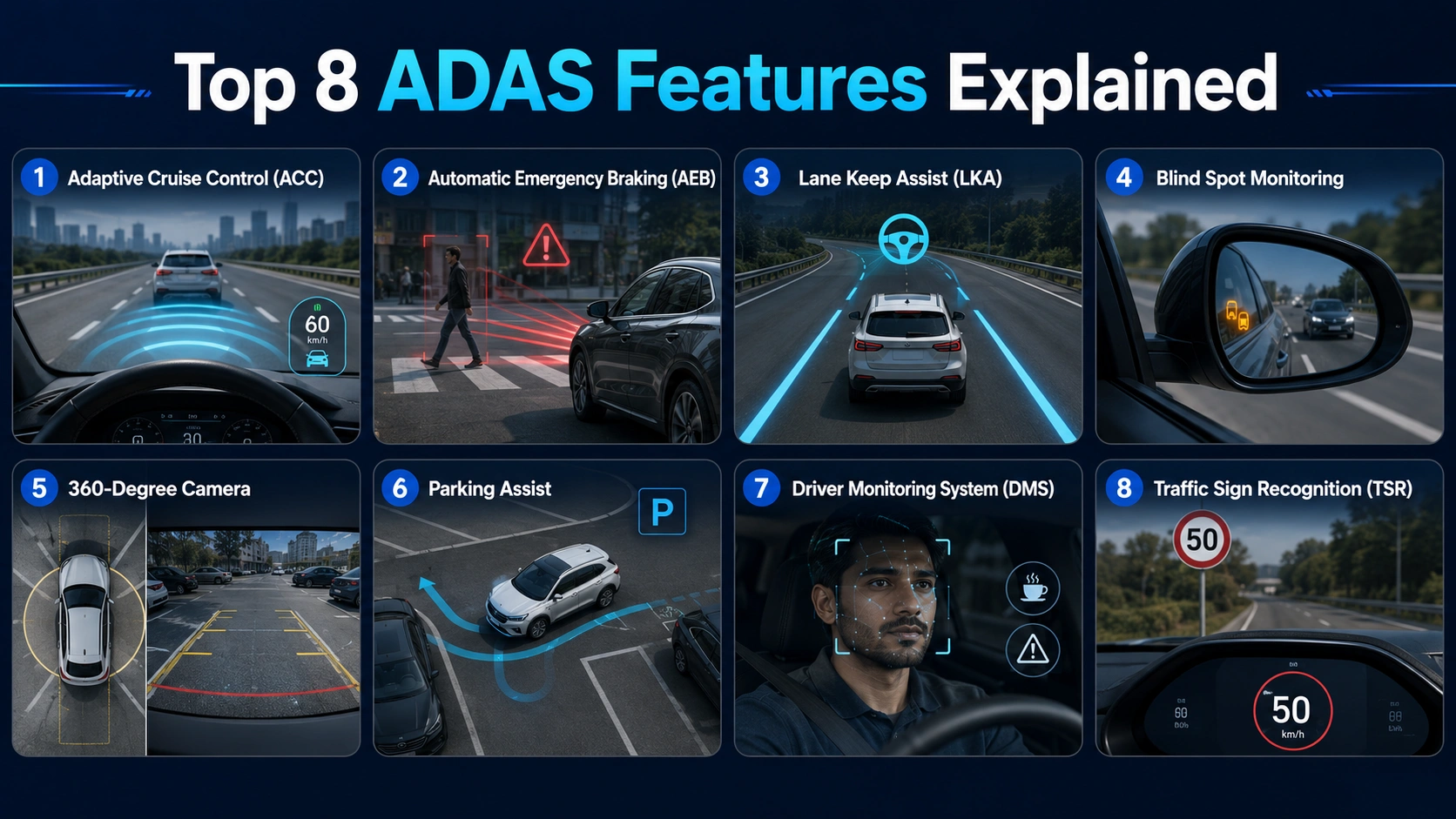
2. Top 8 ADAS Features Explained
In the current landscape of ADAS Cars India, these eight features are the most sought-after for their ability to prevent accidents and reduce driver fatigue.
Adaptive Cruise Control (ACC)
Unlike traditional cruise control, ACC uses radar to maintain a safe following distance from the car ahead. In stop-and-go Indian traffic, this reduces the constant need for manual braking and acceleration.
Automatic Emergency Braking (AEB)
If the system detects an imminent collision with a pedestrian or vehicle and the driver fails to react, AEB automatically applies the brakes. This feature is a cornerstone of modern car safety ratings.
Lane Keep Assist (LKA)
Using a camera to track lane markings, LKA provides gentle steering inputs to keep the vehicle centered if it begins to drift without a turn signal.
Blind Spot Monitoring
Radar sensors on the rear bumper alert the driver to vehicles in their blind spots via icons on the side mirrors. This is invaluable when merging onto busy Indian highways.
360-Degree Camera
This system stitches together feeds from multiple cameras to provide a bird's-eye view of the vehicle. For a deep dive into this tech, read our guide on how a 360-degree camera works.
Parking Assist
ADAS can automate steering while the driver manages the gear and throttle, helping squeeze into tight city parking spots with precision.
Driver Monitoring System (DMS)
Cameras inside the cabin monitor driver head position and eye movements to detect signs of drowsiness or distraction, providing an audible alert to pull over.
Traffic Sign Recognition (TSR)
A forward-facing camera "reads" speed limit signs and displays them on the digital cluster, helping drivers avoid speeding tickets.
3. The Benefits of ADAS in Indian Driving Conditions
The primary goal of Car Safety Technology is the reduction of human error, which is responsible for over 90% of road accidents.
- Life-Saving Interventions: AEB and Lane Keep Assist can prevent catastrophic high-speed collisions on highways.
- Reduced Driver Stress: ACC and Parking Assist make daily commutes in congested cities like Bangalore or Delhi significantly less exhausting.
- Lower Insurance & High Resale: Vehicles with ADAS often attract lower insurance premiums and command a higher trade-in value because of their superior safety credentials.
- Protection of Assets: A 360° camera prevents minor dents and scratches during tight maneuvers, keeping your Paint Protection Film or coating pristine.
4. Hidden Risks and Limitations of ADAS in India
While powerful, ADAS is not infallible. ADAS Cars India face unique hurdles that can sometimes lead to unexpected behavior.
- Inconsistent Lane Markings: If lane paint is faded or missing, features like Lane Keep Assist may fail to activate.
- Chaotic Traffic & Animal Crossings: ADAS sensors can sometimes be overwhelmed by the "organized chaos" of Indian roads, where motorcycles or cattle may cut across suddenly, triggering "phantom braking".
- Environmental Obstruction: Heavy monsoon rain, thick fog, or a layer of mud on the sensor can "blind" the system.
- Dependency Risks: Drivers may become over-reliant on the technology, leading to a lack of situational awareness.
5. Common Myths About ADAS
- Myth 1: ADAS is Self-Driving. Reality: It is an assistance system. You must always keep your hands on the wheel and eyes on the road.
- Myth 2: It Doesn't Work in Rain. Reality: High-end systems work well, but their accuracy can be improved by applying Crystal Vision anti-glare coating to the windshield.
- Myth 3: Ceramic Coating Blinds the Sensors. Reality: When applied professionally, Ceramic Coating actually helps sensors by preventing mud from sticking to them.
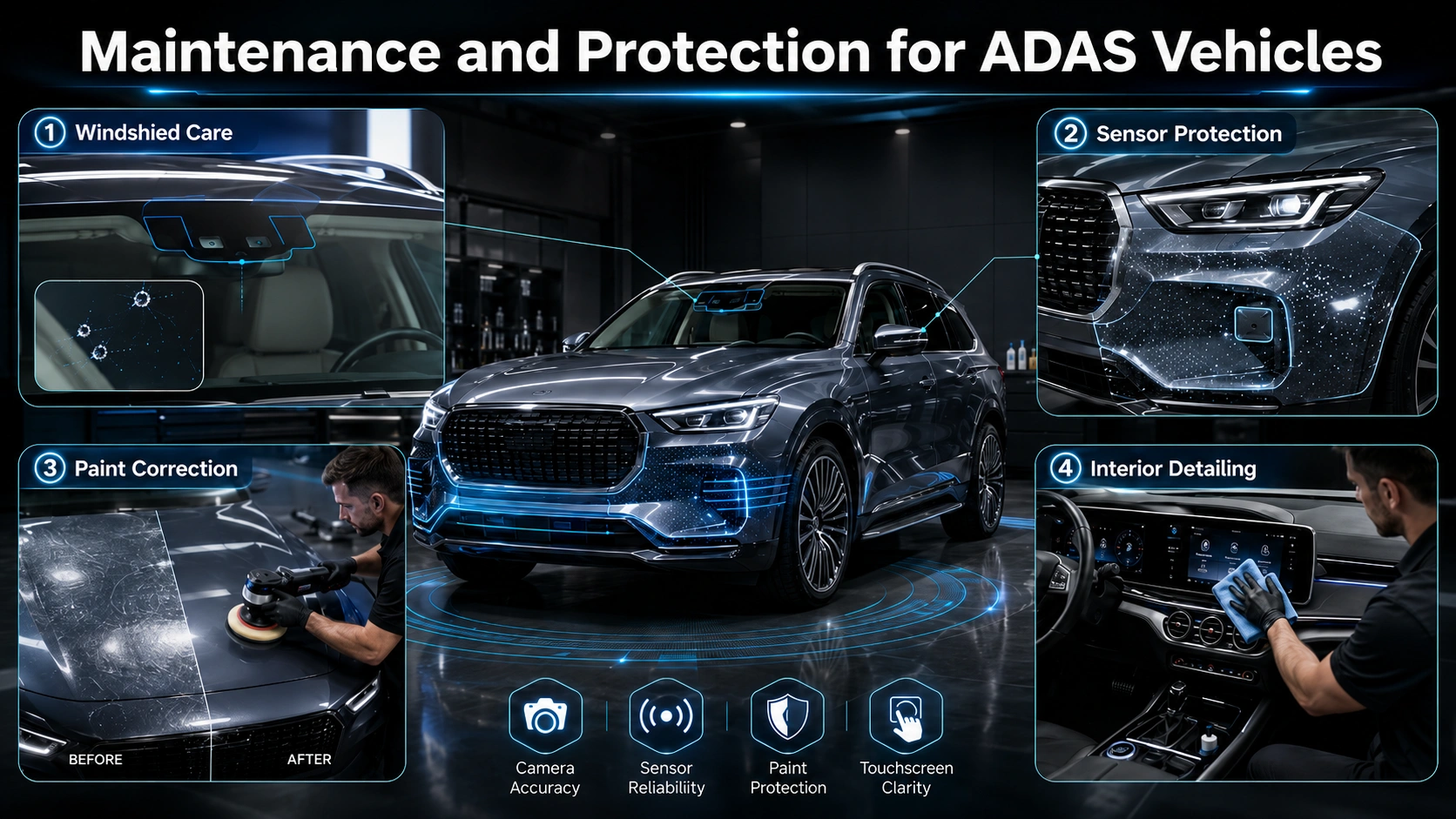
6. Maintenance and Protection for ADAS Vehicles
A car with Advanced Driver Assistance Systems requires a different standard of care than a traditional vehicle. Because the tech depends on clarity, Sensor Protection is non-negotiable.
Windshield Care for Camera Accuracy
Most ADAS cameras are located behind the top of the windshield. A simple rock chip here can render your safety systems useless. Using Windshield Armor prevents cracks and ensures the camera has a distortion-free view of the road.
Sensor Protection with Dragon PPF
Front-facing radars and cameras are highly prone to rock chips. Applying Dragon PPF over the headlights and front bumpers provides a self-healing physical barrier that shields these expensive sensors from damage.
Paint Correction for Vision Clarity
Before applying any protective layer, professional Paint Correction is required to remove swirl marks and oxidation that could cause light refraction issues for external 360° cameras.
Interior Detailing for Touchscreens
In 2026, ADAS data is displayed on large digital clusters. Fingerprints and dust can make this data hard to read. Professional Interior Detailing ensures your high-tech cabin remains hygienic and clear.
7. Conclusion: The Future of Car Safety Technology
ADAS in Cars is more than just a trend; it is the new standard of life-saving technology for Indian families. By embracing these systems, we move toward a future with fewer accidents and more relaxed travel.
However, the effectiveness of ADAS is directly proportional to how well you maintain the vehicle's "vision." From Ceramic Coating that repels mud from sensors to Dragon PPF that stops rock chips, Detailing Devils is your partner in preserving the high-tech soul of your vehicle.
Protect Your High-Tech Ride Today!
Don't let a stray stone chip or a layer of monsoon mud blind your vehicle's safety systems. Whether you need the 10-year armor of Dragon PPF or the clarity of Interior Detailing, the experts are here to help.
📍 Locate a Detailing Devils Studio Near You
📞 Book Your Free Tech & Paint Inspection Today!
Frequently Asked Questions (FAQs)
Not yet, but by 2026, most mid-range and premium ADAS Cars India now feature at least Level 1 or Level 2 systems.
No. It is an assistant. It can significantly reduce the severity of impacts or avoid them under specific conditions, but driver intervention remains critical.
When applied professionally at a Detailing Devils studio, Ceramic Coating does not interfere with the camera. It actually improves accuracy by keeping the glass cleaner for longer.
Heavy rain or thick mud can obstruct the camera's view. Regular professional car washing and using hydrophobic glass coatings can mitigate this.
The main cost arises if a sensor is damaged. This is why investing in Sensor Protection like PPF is much cheaper than replacing a radar unit.
Yes, modern Traffic Sign Recognition systems are specifically calibrated to detect standard Indian speed and caution signs.
Absolutely. Buyers in the used market prioritize safety features, often resulting in a 5% to 15% higher resale price for ADAS-equipped vehicles.
The Electronic Control Unit (ECU) acts as the brain, processing sensor data to trigger safety actions.
See Also:
- Fastest Growing Franchises in India — Discover the fastest-growing franchise opportunities in India and learn which business sectors offer strong growth potential and attractive returns.
- Top 5 High Mileage Cars in India — Compare India's most fuel-efficient cars and find the best options for maximizing mileage while reducing fuel costs.
- E20 Petrol Concerns: Government Clarifies Its Impact on Vehicles — Understand what E20 petrol means for your vehicle, the government's latest clarification, and whether your car is compatible with the new fuel.
- Smart Ways to Extend Your Car Battery Life — Explore practical maintenance tips to improve your car battery's performance, increase its lifespan, and avoid unexpected breakdowns.
- Aluminum Wheel Cleaning & Polishing Guide — Find out the correct techniques, tools, and products to clean, polish, and protect aluminum alloy wheels for a long-lasting shine.

